Blog
What Furniture to Put in a Bedroom: A Room-by-Room Guide

Key takeaways
- Start with the bed and mattress, then bedside tables, then clothes storage; everything else is optional.
- In a small room, choose storage beds, sliding wardrobes and slim bedside tables to keep the floor clear.
- Leave roughly 60cm beside the bed where you can, and enough space to open every door and drawer fully.
- Matching every piece is not necessary; repeating one finish or colour ties a mixed room together.
- Buy the bed first, because its size dictates what fits around it, and measure doorways and stairs before ordering.
What furniture to put in a bedroom depends on your space, but the order is always the same: a bed and mattress first, then bedside tables, then clothes storage such as a wardrobe or chest of drawers. Add extras like a dressing table, desk or blanket box only once the floor plan allows.
If you’re furnishing a bedroom from scratch, or simply rethinking one that feels cluttered, it helps to work in priority order. This guide takes you through what every bedroom needs, what’s worth adding, and how to arrange it all for rooms of different sizes.
What furniture to put in a bedroom: the essentials
Three things make a bedroom work as a bedroom. Everything else supports them.
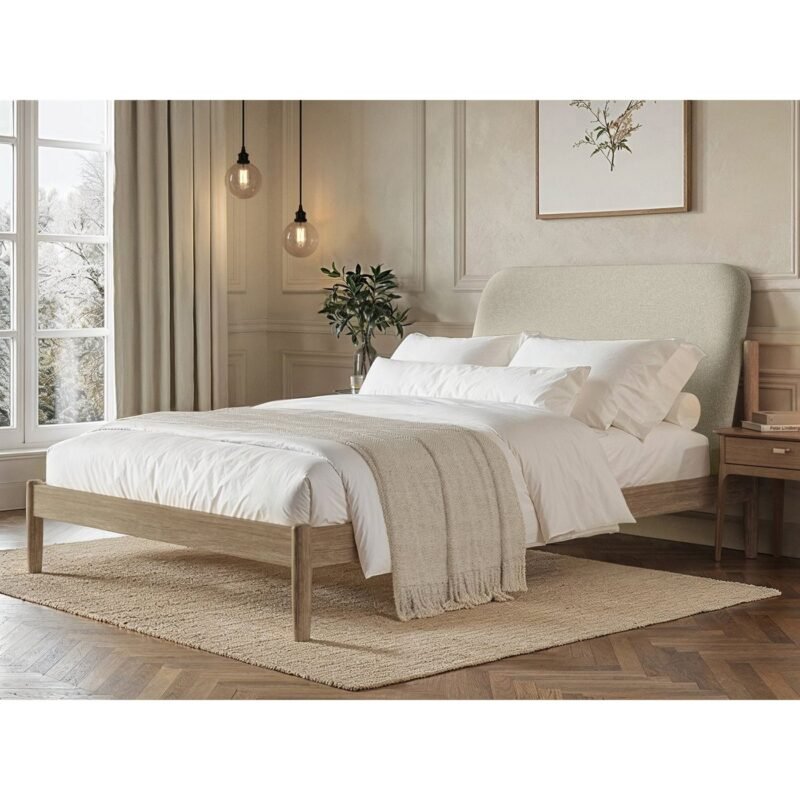
1. A bed frame that suits the room
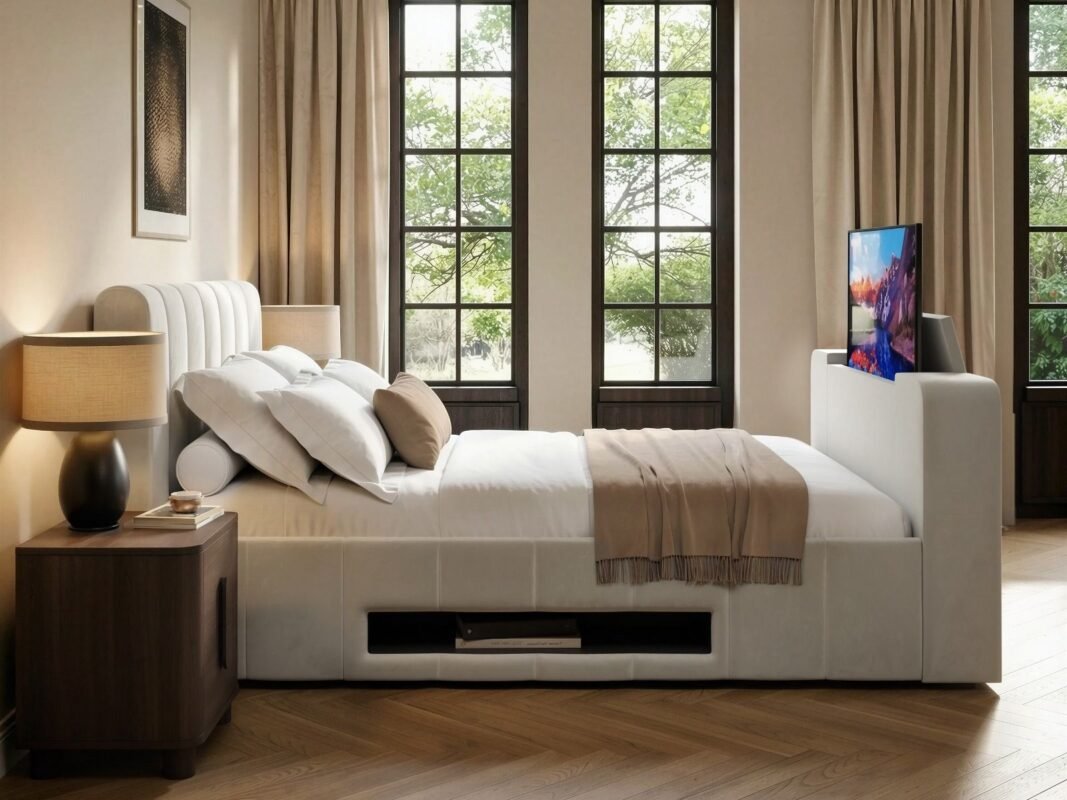
The bed is the biggest item, so it sets the size of everything else. Typical UK sizes are:
- Single: 90 x 190cm
- Small double: 120 x 190cm
- Double: 135 x 190cm
- King: 150 x 200cm
- Super king: 180 x 200cm
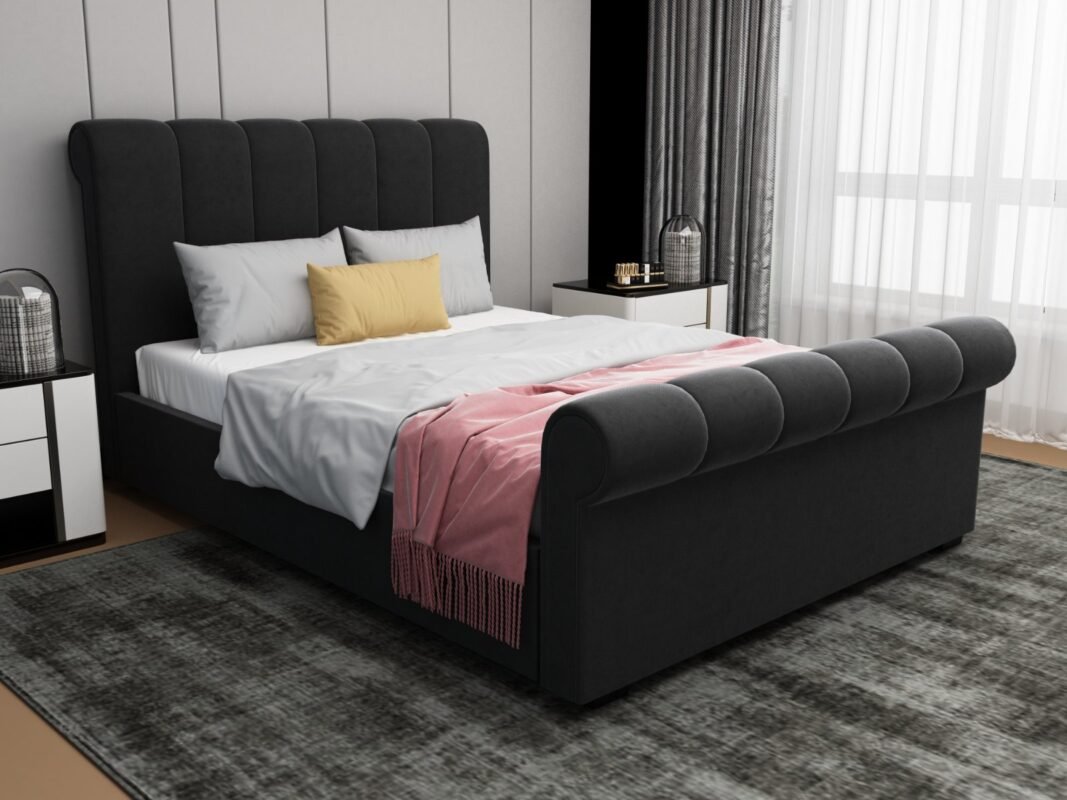
Remember that the frame, headboard and footboard add to the mattress size, so check the full frame dimensions. Our Beds range covers wooden, fabric and metal frames in all the common sizes.
2. A mattress that matches your base
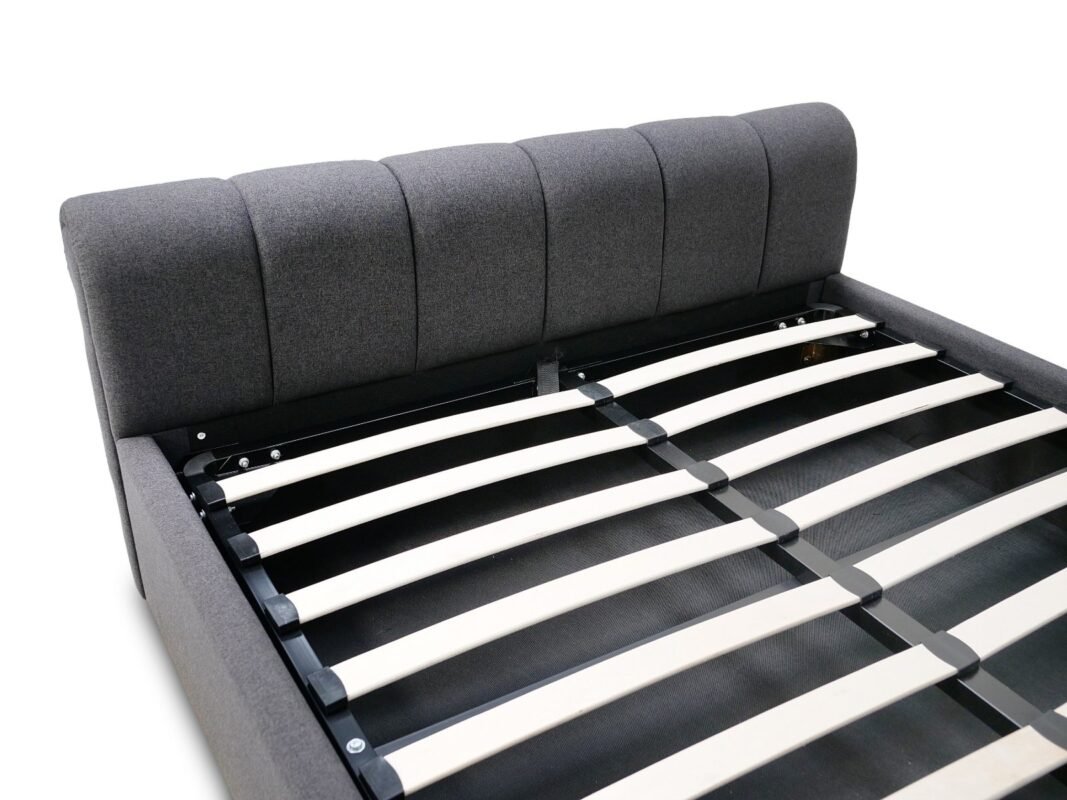
Pocket sprung, memory foam and hybrid Mattresses all feel different, so choose one for how you sleep. Check it suits your base too: a solid platform top and a slatted frame don’t behave in quite the same way. Whatever you pick, new upholstered furniture and mattresses sold in the UK must meet fire safety rules, so look for the permanent label.
3. At least one bedside table
You need somewhere for a lamp, phone and glass of water. Aim for a top roughly level with your mattress. In a narrow room, a wall-hung or slim design saves space; browse Bedside Tables to compare drawer and shelf options.
How much storage does a bedroom need?
Clothes storage is the next priority. A good rule is to start with what you own: hanging space for coats, shirts and dresses, drawers for folded items, and somewhere out of sight for spare bedding or luggage.
- Wardrobes: the main hanging space. Standard depth is around 50-60cm. Hinged doors need room to swing open; sliding doors don’t, which is useful in tight rooms. See our Wardrobes.
- Chests of drawers: ideal for folded clothes and, with a flat top, a spot for a mirror or lamp. Allow around 80-90cm in front so drawers pull out comfortably.
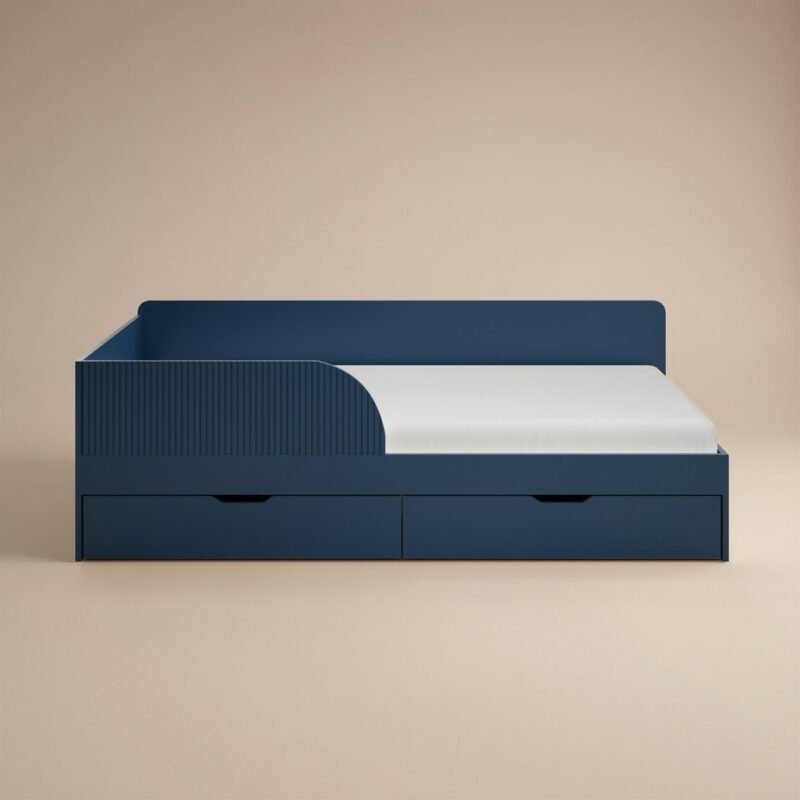
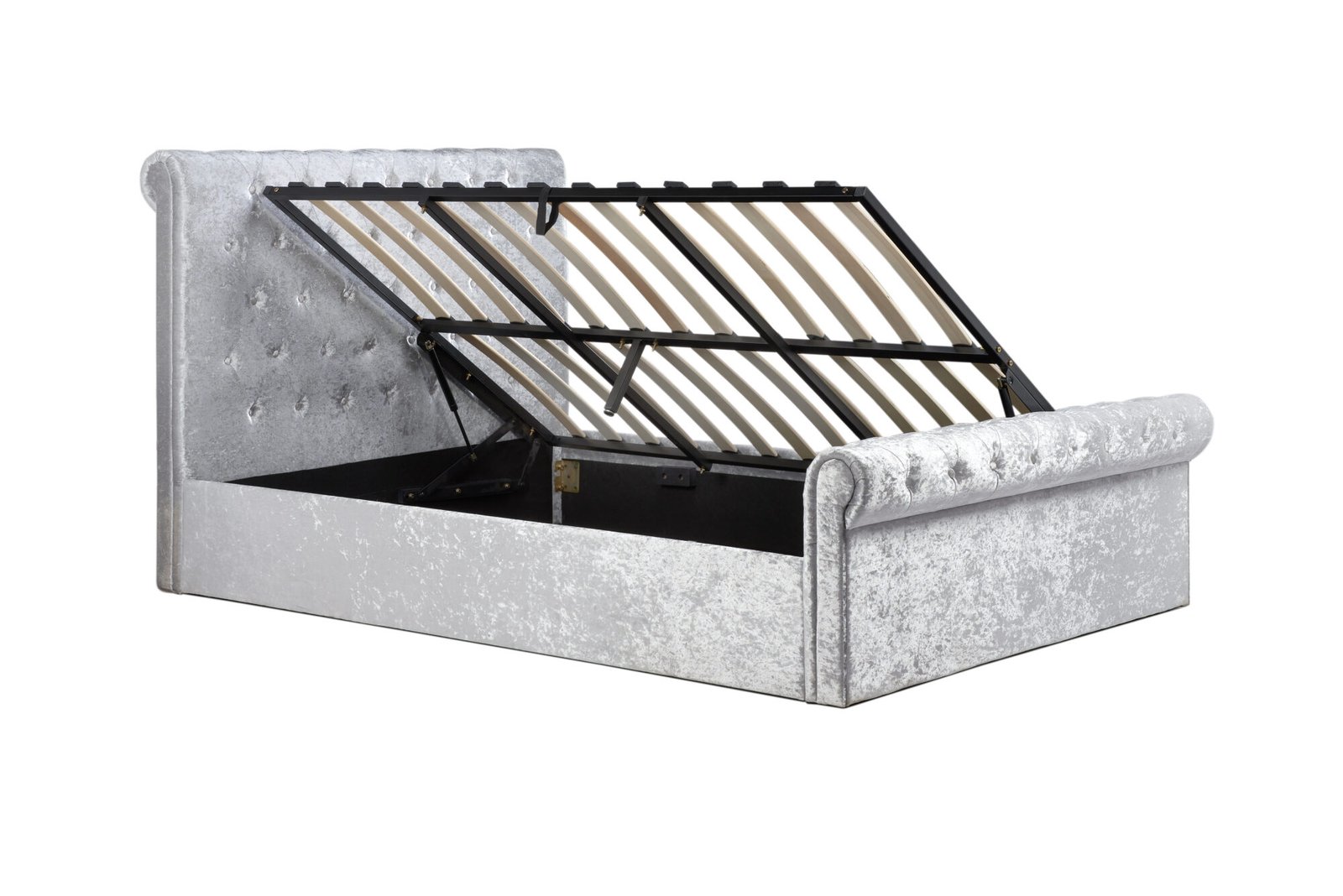
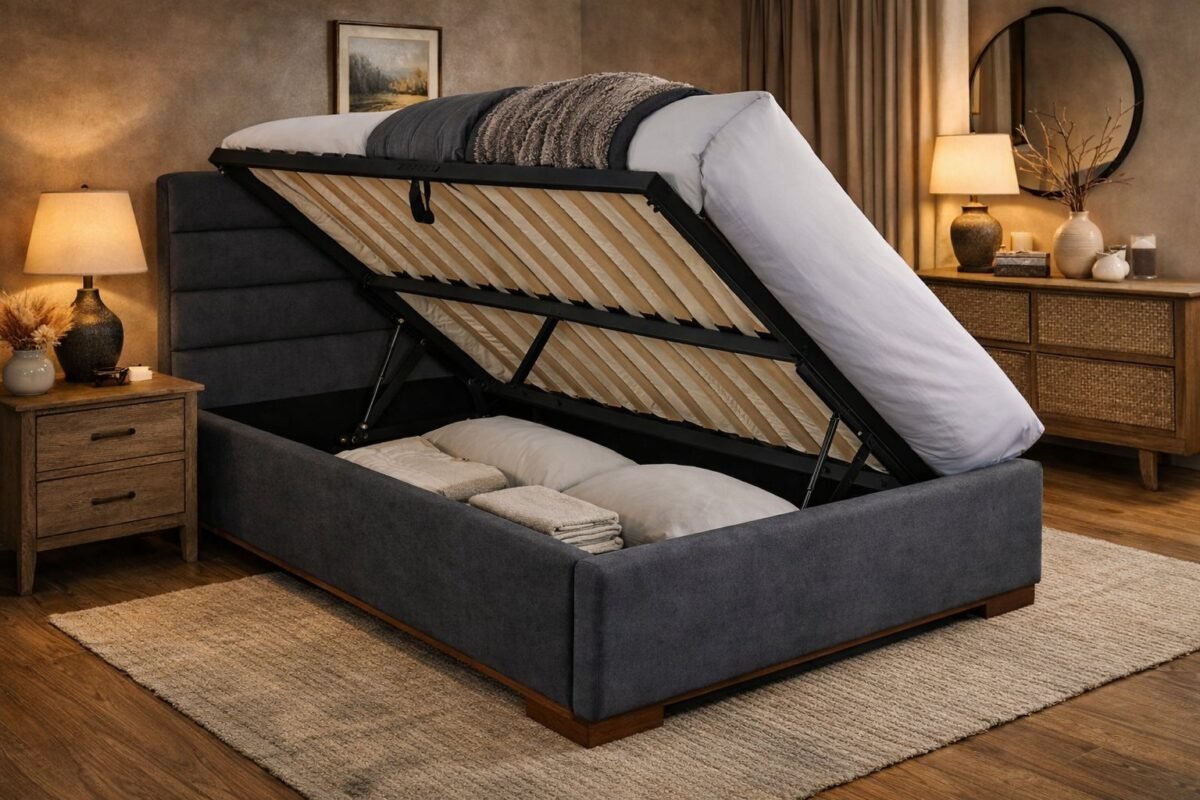
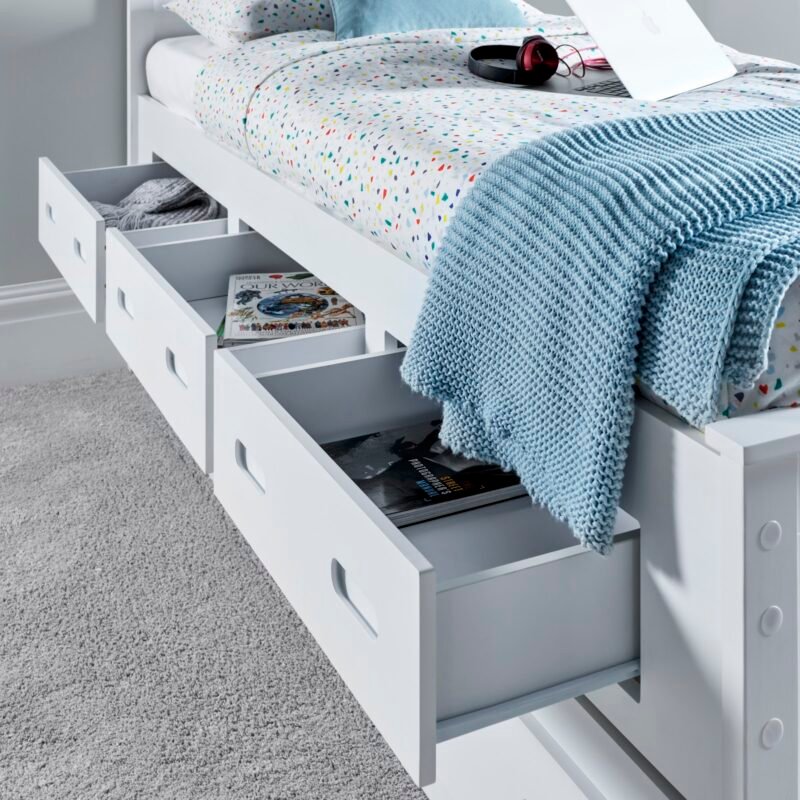
- Storage beds: an ottoman bed lifts the whole base to reveal a space the full size of the mattress, while drawer beds pull out at the side or foot. Both are good for spare bedding, shoes or off-season clothes. Take a look at Beds With Storage.
One trade-off: drawer beds need clear floor space beside or at the foot of the frame, while ottoman beds need room to raise the base.

Which nice-to-have pieces are worth adding?
Once the essentials are in, add extras only if they earn their floor space.
- Dressing table or mirror: useful if you get ready in the bedroom. A full-length mirror on a wall takes almost no floor space.
- Blanket box or bench: sits at the foot of the bed for extra storage and a place to sit and put on shoes.
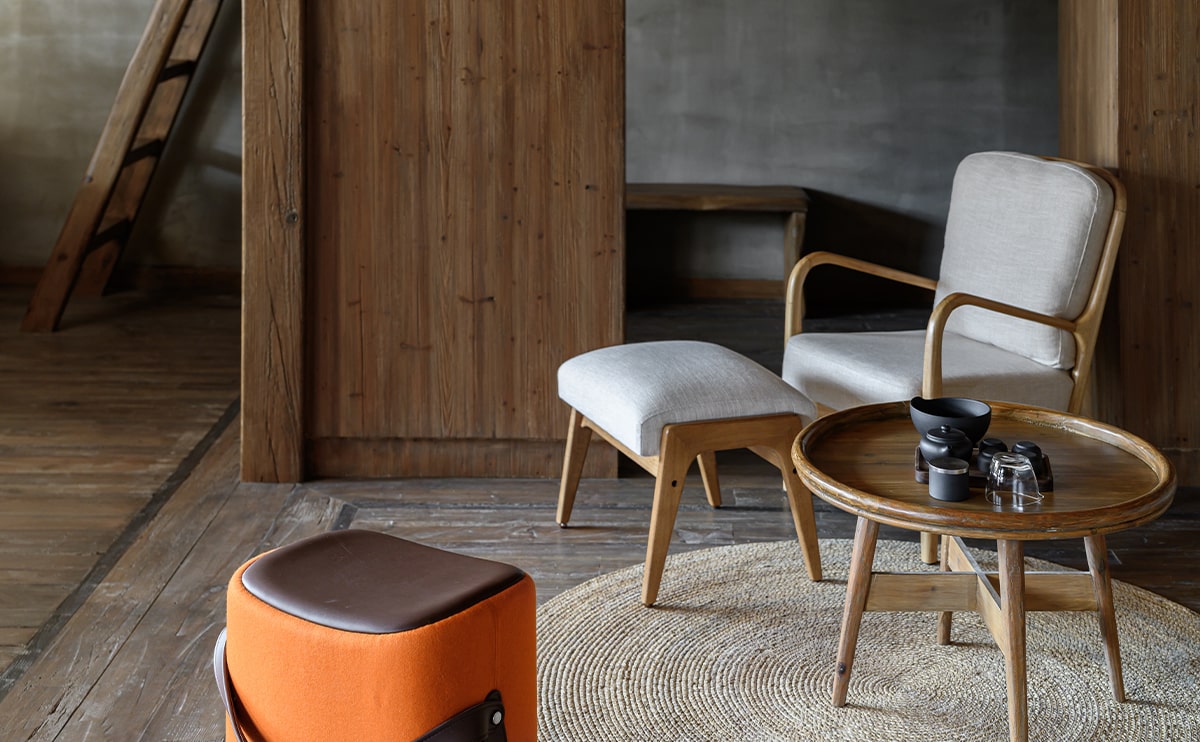
- Armchair or accent chair: good for reading, but only if there’s a spare corner.
- Desk: handy for homework or working from home (more on that below).
- Laundry basket: an everyday item that’s easy to forget, and it keeps clothes off the floor.
How should you lay out a small, average or large bedroom?
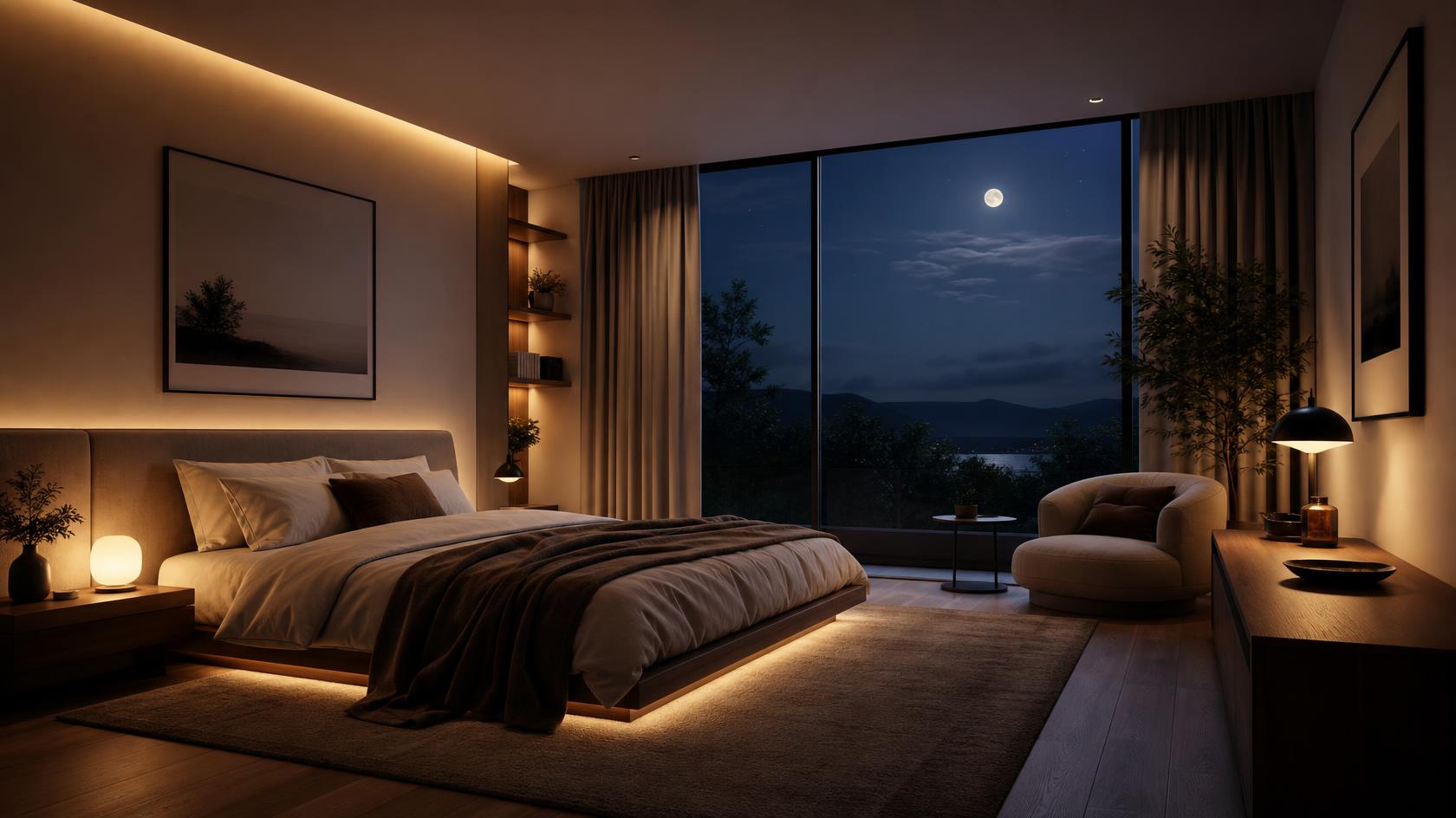
Place the bed first, as it’s the focal point. Most interior guides, including Ideal Home’s bedroom layout advice, suggest putting it against a wall rather than under a window, ideally with the headboard on the longest solid wall. Then add storage, then extras.
| Room size | Bed to consider | Storage | Extras |
|---|---|---|---|
| Small (box room or narrow room) | Single, small double or double with built-in storage | Sliding wardrobe, slim chest of drawers | Wall mirror, wall-mounted shelf |
| Average | Double or king | Wardrobe plus chest of drawers | Blanket box, small dressing table |
| Large | King or super king | Wardrobe, chest and tallboy or second wardrobe | Armchair, desk, full dressing table |
Clearance guidance to keep the room usable
- Leave roughly 60cm along each side of the bed you use, so you can get in and out and make the bed.
- Keep the door swing clear, and don’t let a wardrobe or chest block it.
- Allow space for every door and drawer to open fully before you buy.
- Keep tall pieces away from main windows so they don’t block light.
- If you have a tall wardrobe or chest, secure it to the wall with the fixings supplied.
In a small room, measure first and sketch the floor plan on paper. A single bed with drawers underneath can replace a separate chest altogether.
Should bedroom furniture match?
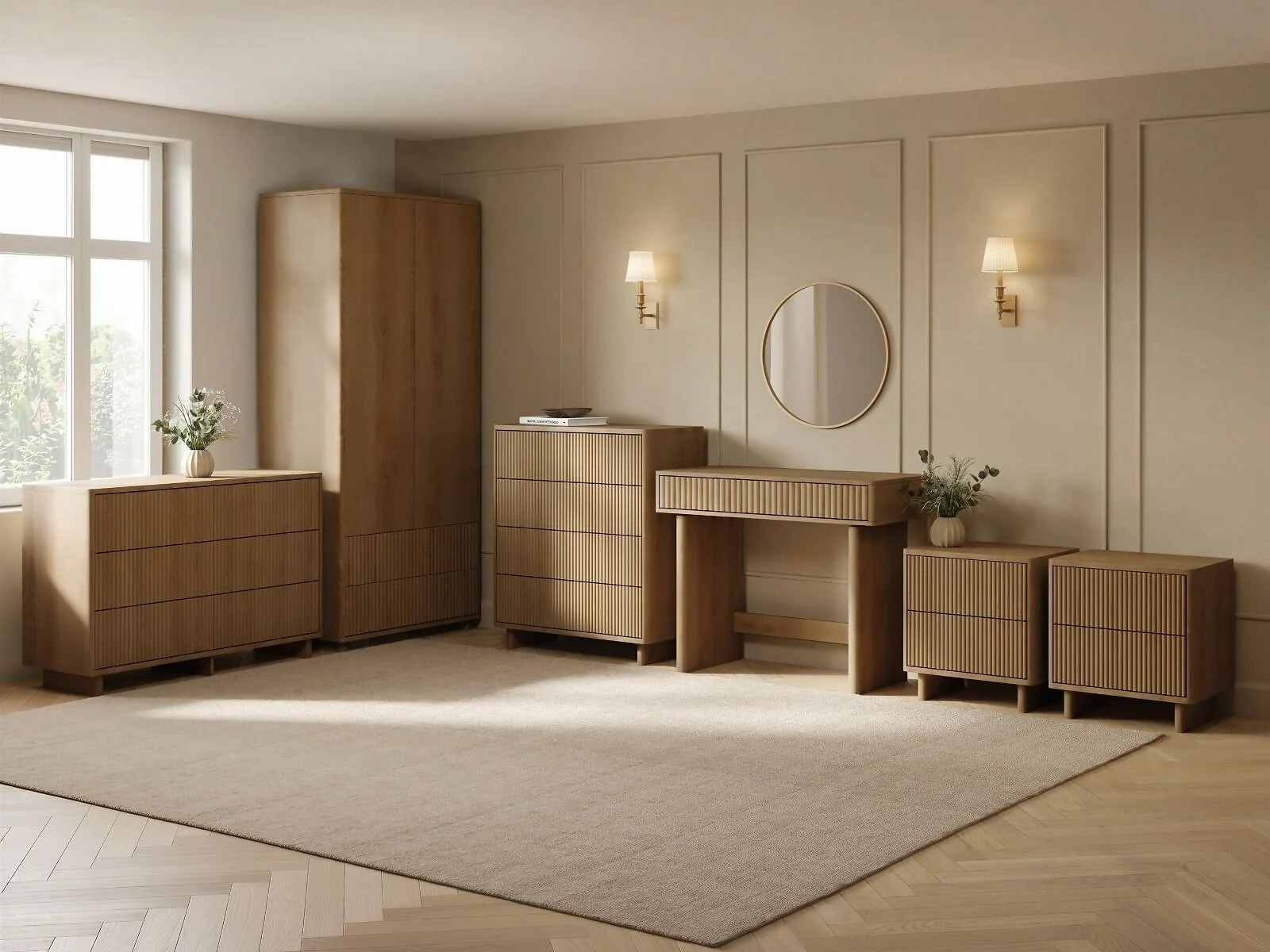
It doesn’t have to. A fully matching set looks calm and coordinated, and it’s the simplest way to a finished look. A mixed room feels more personal and can be built up over time.
If you mix, repeat one element to tie it together:
- Finish: for example, keep all the wood tones in the same family.
- Colour: match handles, legs or fabric to one accent colour.
- Shape: echo clean lines or rounded edges across pieces.
Limit yourself to two or three finishes in total, and let the bed be the statement piece. Our Bedroom furniture range includes pieces in matching styles as well as standalone items that mix easily.
How do you furnish a bedroom that doubles as a workspace or guest room?
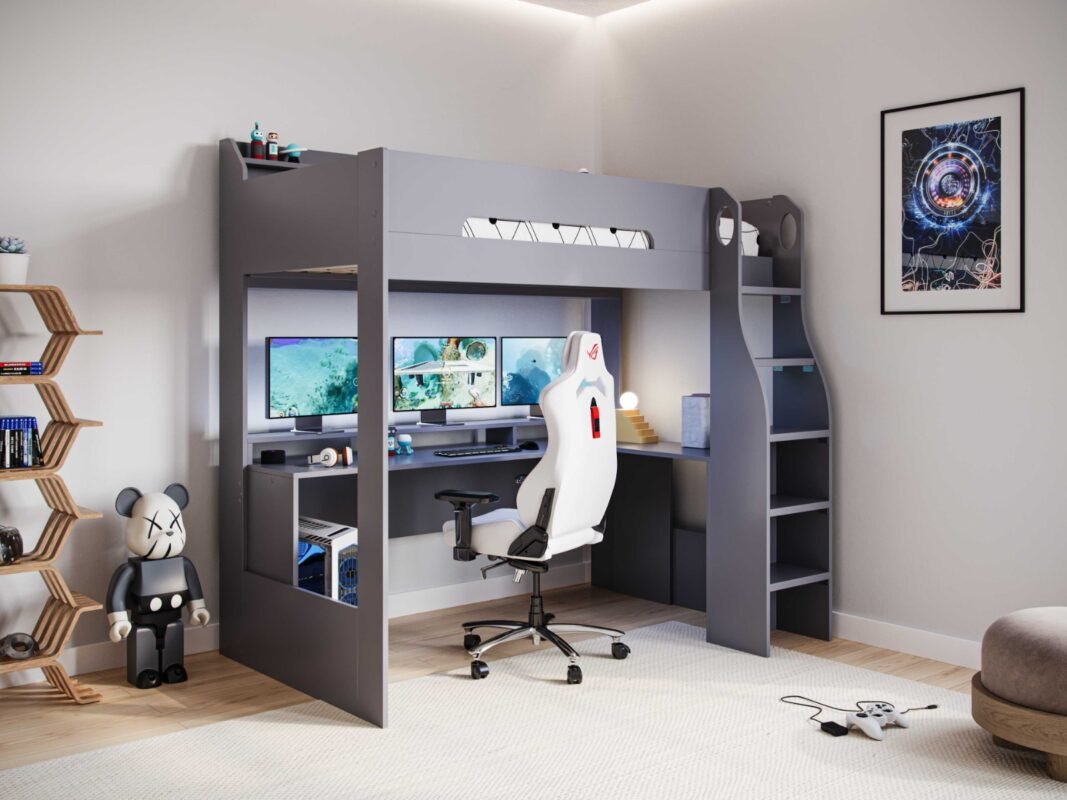
If your bedroom has to do two jobs, choose furniture that folds, stacks or hides away.
Bedroom plus desk
Pick a compact desk and put it against a wall rather than at the foot of the bed. Choose a supportive chair, and keep paperwork in a drawer or box so the room still feels restful at night. A desk near a window gives the best daylight.
Spare room or guest room
A sofa bed gives you a seat by day and a bed when guests stay. Allow about 50-60cm around it so it can fold out, and check the opened dimensions before ordering. Browse Sofa Beds to compare sizes and mechanisms. An ottoman bed or bed with storage also works, as it hides spare bedding.
What order should you buy bedroom furniture in?
Buying in the right order avoids expensive mistakes. Use this checklist:
- Measure the room and note windows, radiators, sockets and door swings.
- Measure access: doorways, hallways and stairs, especially for bulky wardrobes and beds.
- Choose the bed and size, as it sets the scale for everything else.
- Add the mattress that suits your sleep and your base.
- Add storage: wardrobe, chest of drawers or a storage bed.
- Match bedside tables once the bed is in place.
- Finish with extras: mirror, blanket box, chair, desk, lighting.
Check whether each item arrives flat-packed and needs assembly, and make sure you have room to build it where it will stand.
Ready to furnish your bedroom?
Start with the bed, add storage that fits your floor plan, and leave room to move. With 2,000+ pieces across bedroom, living, dining and kids’ furniture, plus free delivery to the UK Mainland, Furnmart makes it easy to put the whole room together in one place. You can browse all our Bedroom furniture to get started.
Browse the full Furnmart range of Beds, Mattresses, Sofas and Furniture, with delivery across UK Mainland and Multiple Payment Options.
Frequently asked questions
What is the minimum furniture a bedroom needs?
At minimum, a bedroom needs a bed with a mattress, somewhere to store clothes and a bedside table. That could be a bed frame, a small wardrobe or chest of drawers and one bedside cabinet. Everything else is optional.
Should the bed go against the wall or in the middle of the room?
Usually against a wall, with the headboard on the longest solid wall and not under a window. That frees up floor space and feels more stable. In a larger room you can float the bed, but leave walking space on both sides.
How much space should you leave around a bed?
Aim for about 60cm along each side you use and enough room at the foot to walk past. In very small rooms you may have to settle for less on one side, but keep the door and drawers able to open fully.
What furniture works best in a small bedroom?
Choose pieces that do more than one job. A bed with storage replaces a chest of drawers, a sliding wardrobe avoids door swing and slim bedside tables save floor space. Mirrors and wall shelves add function without taking up room.
Do you need a wardrobe if the bed has storage?
Often yes, because storage beds suit folded items and spare bedding rather than hanging clothes. If you have few hanging items, a rail or small wardrobe plus a storage bed may be enough. Count how much you need to hang before deciding.