
Blog
Best Bed Frames UK 2026: How to Choose the Right One

Key takeaways
- Choose your mattress size first, then check the frame's outer dimensions and leave around 50-60cm to walk around the bed.
- Wooden frames suit most rooms, fabric frames add softness, metal frames save space and storage frames earn their keep in small rooms.
- Slatted bases let a mattress breathe, while solid bases give firm, even support; check what your mattress type needs.
- Joints, slat support, weight capacity and finish tell you more about quality than looks alone.
- Measure doors, hallways and stairs before you order, because a bed that doesn't fit through the house is the most common regret.
The best bed frames in the UK are the ones that match your mattress size, fit your room with space to walk around, and suit how you sleep. Decide on size first, then material, then base. For most adults, a sturdy wooden or fabric frame with well-supported slats is a sensible starting point.
What should you decide first when choosing a bed frame?
If you’re weighing up which bed frame to buy, start with three questions rather than a style. Who is sleeping in it, how big is the room, and what mattress are you putting on it?
- Who sleeps in it: a solo sleeper, a couple, a guest or a growing child all need different things. Tall sleepers should check the frame length as well as the width.
- The room: measure the wall the bed will sit against, plus the space either side and at the foot.
- The mattress: frames are named after the mattress they take, so a double frame takes a double mattress. The outer frame is always slightly larger than the mattress itself.
Our bed size guide lists UK bed and mattress sizes if you want to double-check before you shop.
Best bed frames UK: which type suits you?
Each frame type has a clear strength and a trade-off. Here’s how they compare in plain terms.
| Frame type | Best for | Trade-off |
|---|---|---|
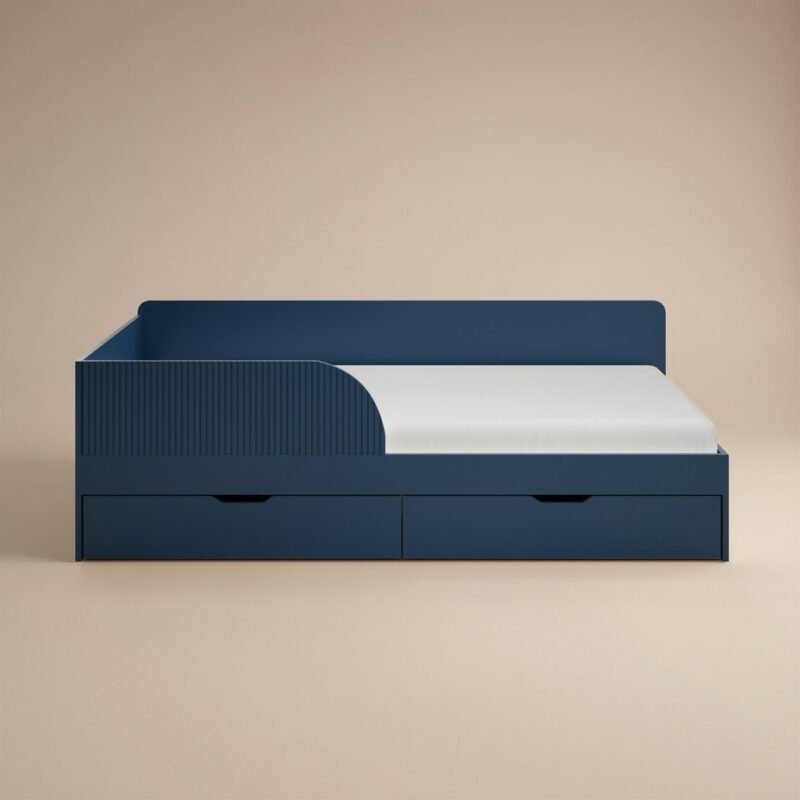
| Wooden | Classic, durable looks that suit most bedrooms | Heavier to move; finish can mark if knocked |
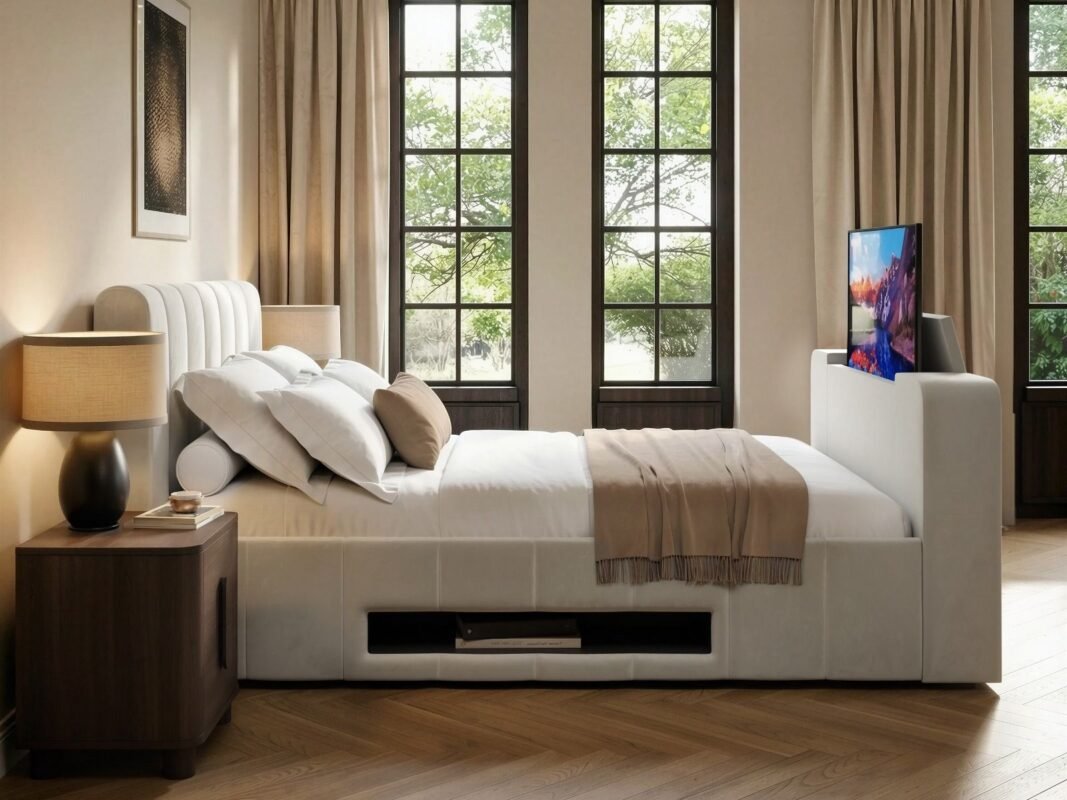
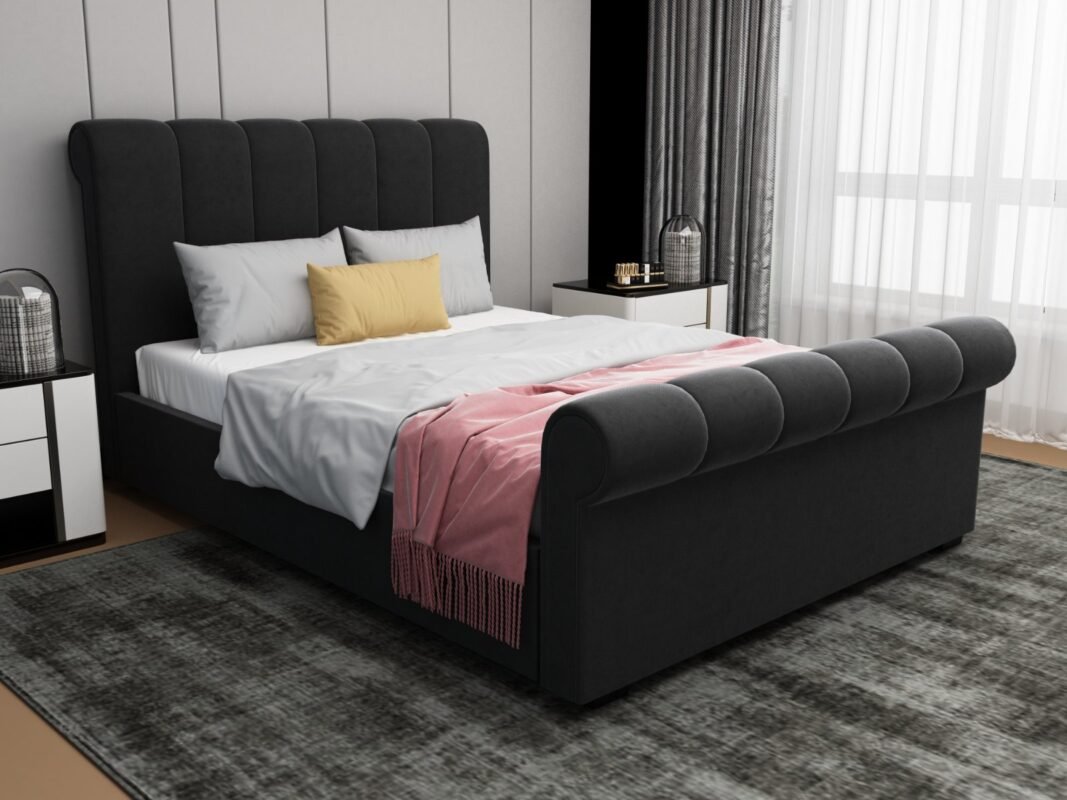
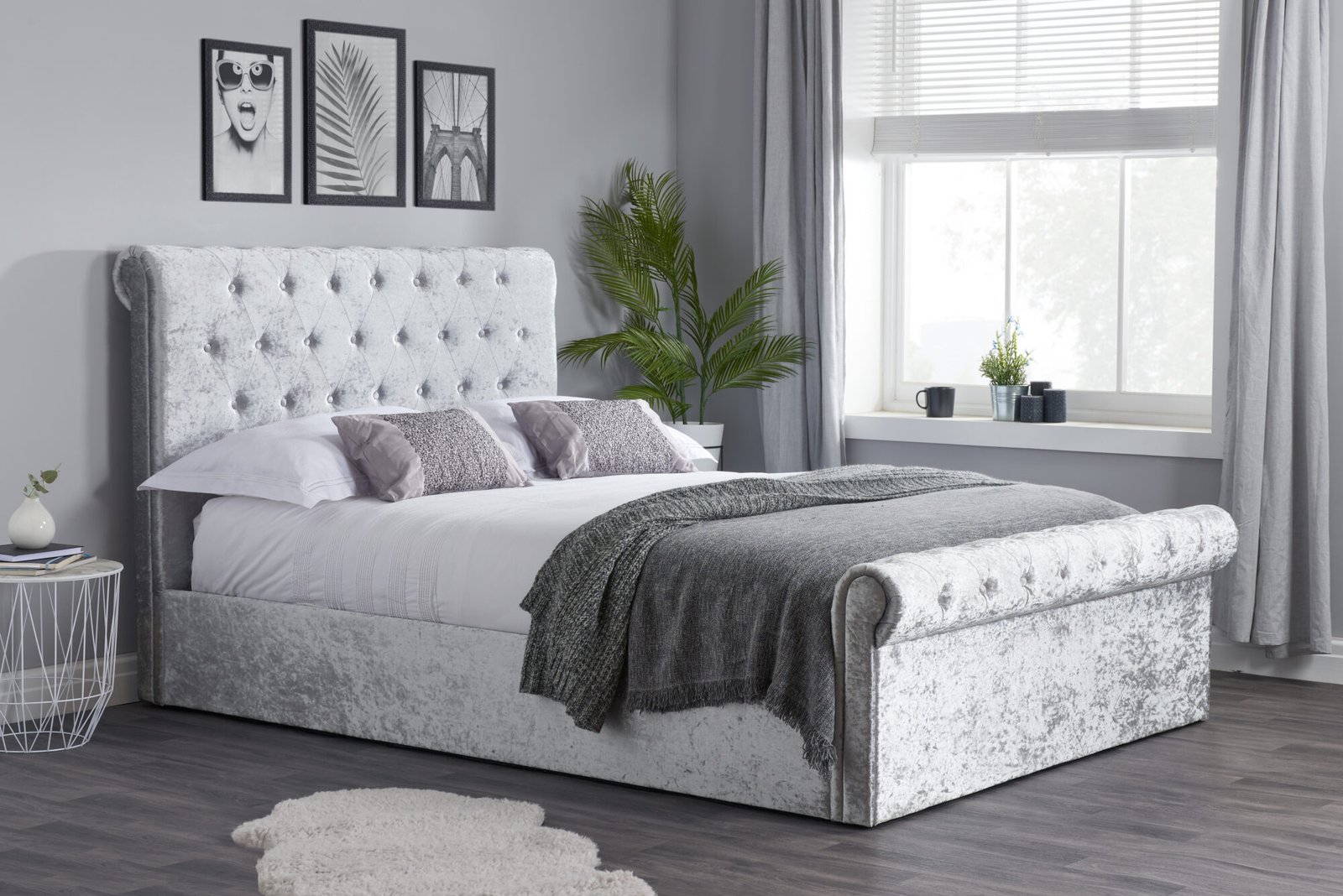
| Fabric (upholstered) | A softer look and a comfortable headboard to lean on | Deep headboards take up more floor space |
| Metal | Slim profile, light feel, good for smaller rooms | Less cosy; check joints are well fixed |
| Divan | Plain, practical base with drawers as an option | Drawers need side clearance to open |
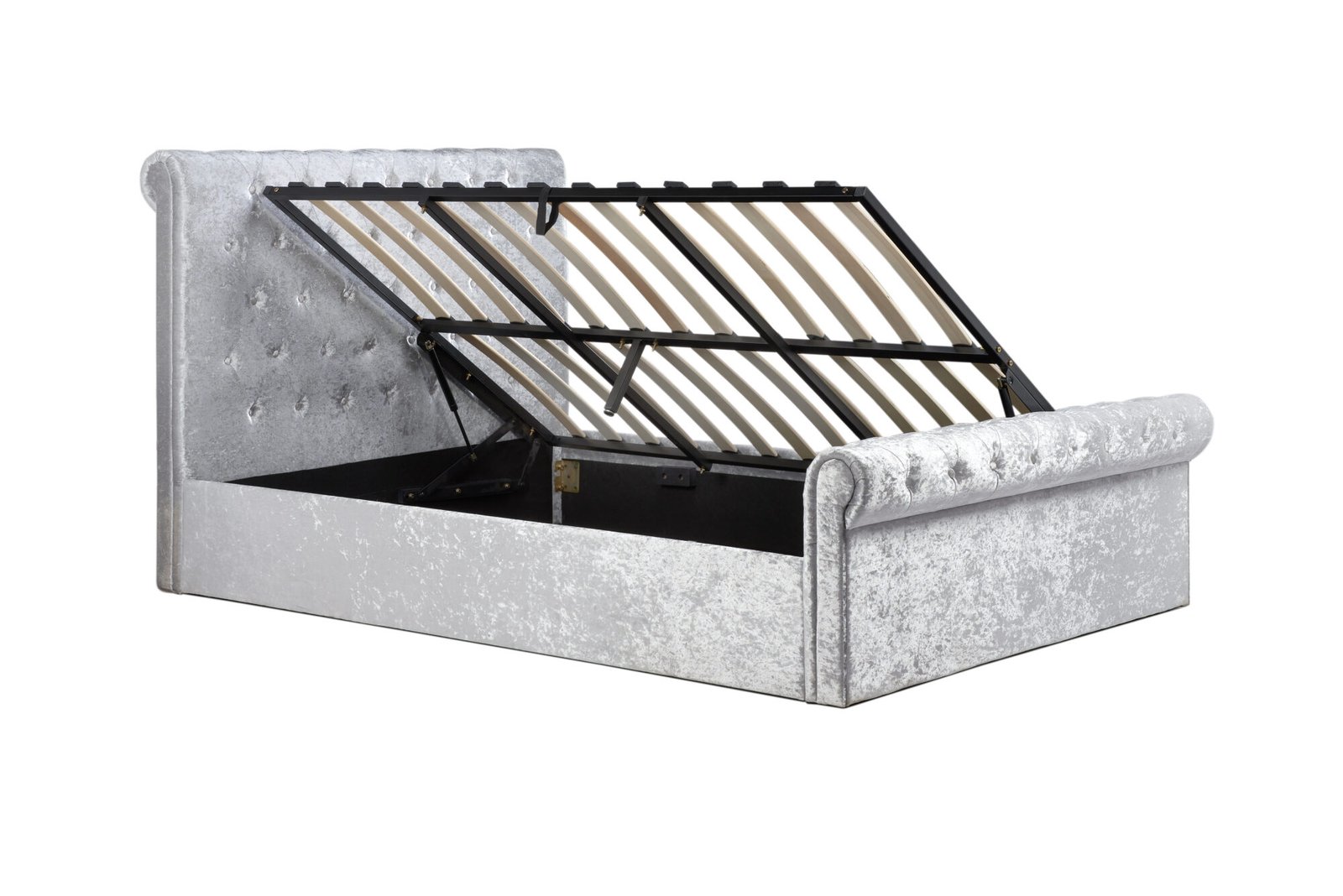
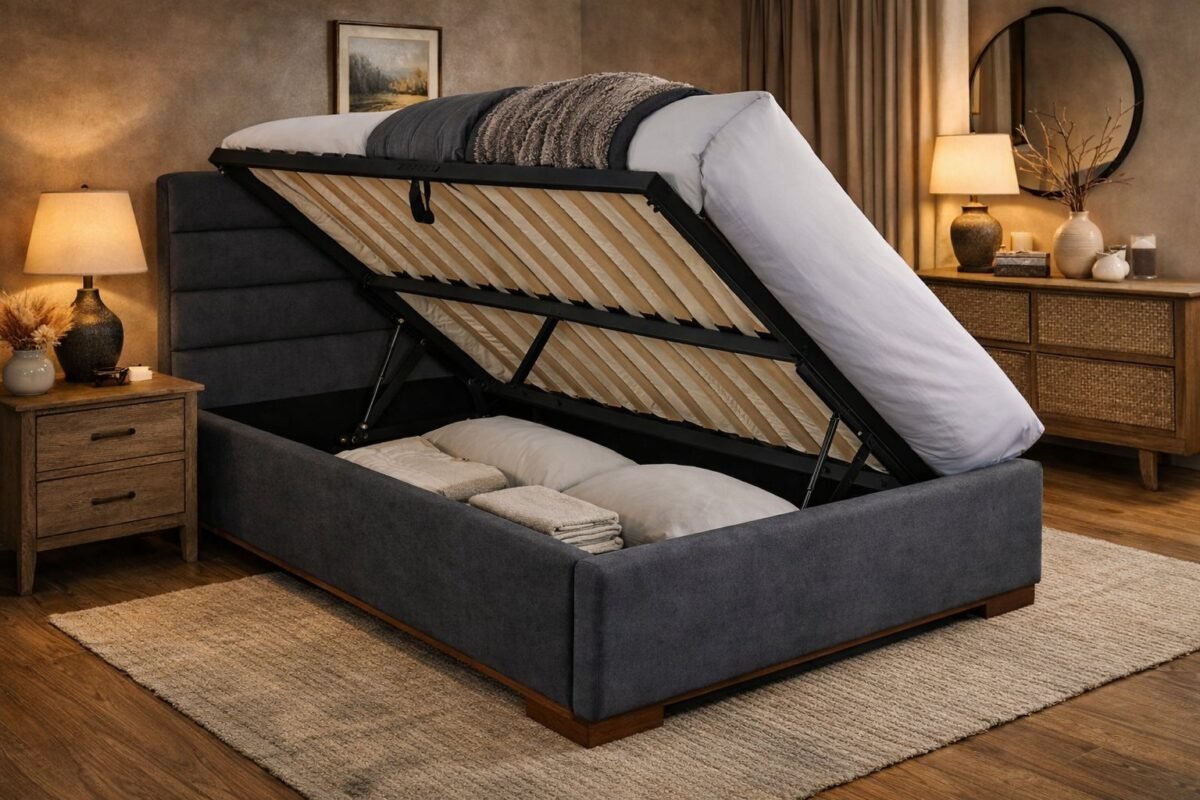
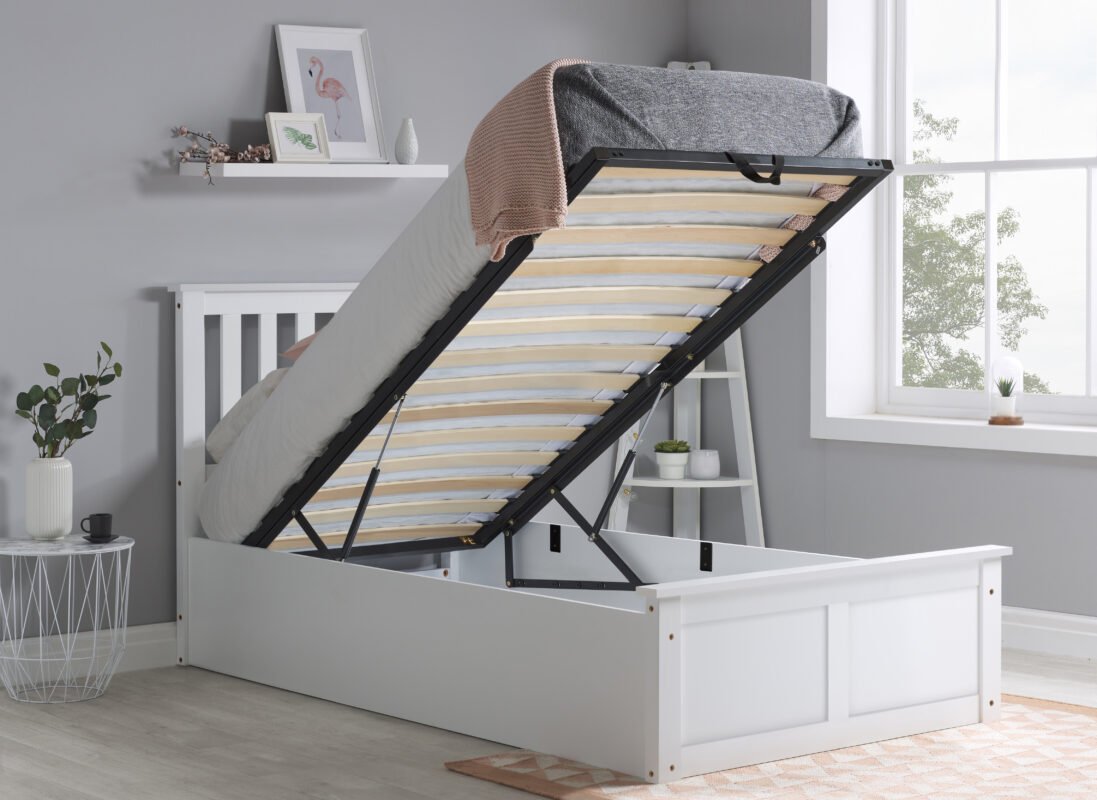
| Storage (ottoman or drawer) | Small rooms where floor space is tight | Heavier, and the base is harder to carry |
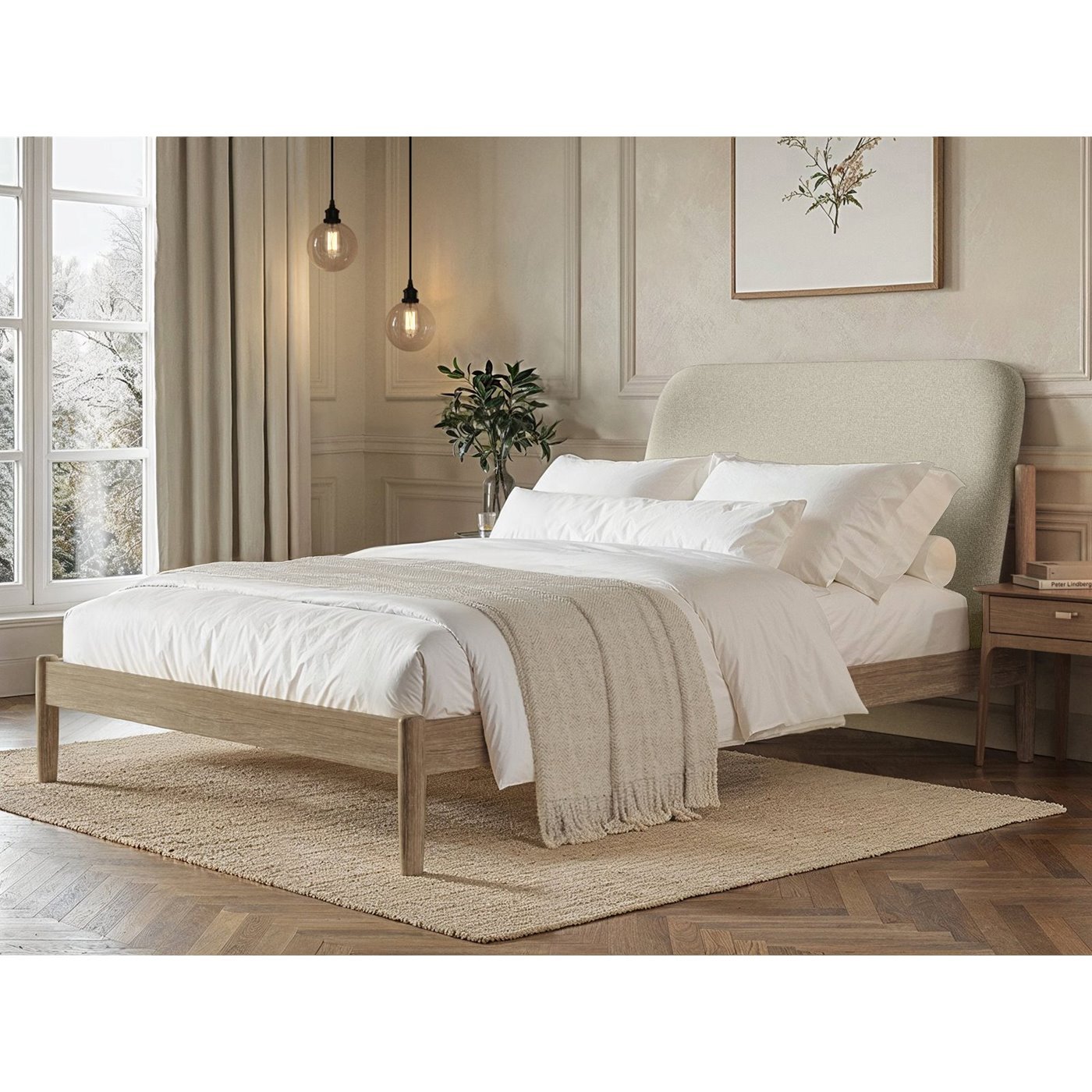
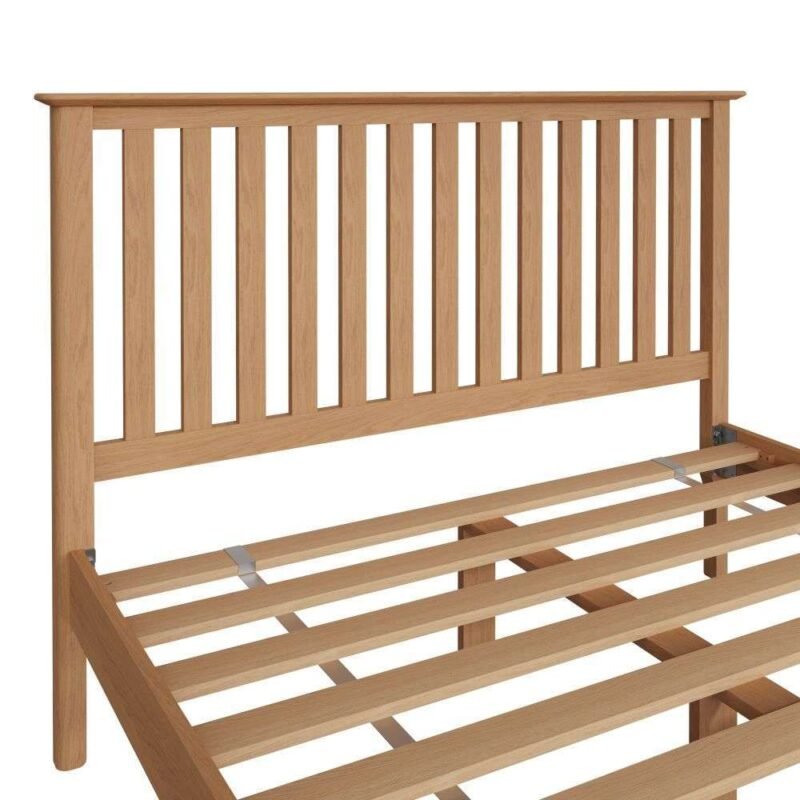
Wooden frames are the all-rounder. Our Kingsley Light Oak Bed Frame shows the kind of simple, light-toned design that works in most bedrooms. You can browse the full range of Bed Frames to compare finishes and styles side by side.
Frame lifespan depends heavily on material. Tom’s Guide notes that frames typically last between seven and 20 years, so it is worth paying attention to construction rather than choosing on looks alone.
If floor space is your main problem, a storage frame can replace a chest of drawers. Our guides to storage beds and the double ottoman bed cover how much they hold, so we won’t repeat that here.
Bed frames double vs king size: which fits your room?
The jump from a double to a king is bigger than the numbers suggest, especially once you add a headboard and walking space. Standard UK mattress sizes are:
| Size | Mattress (cm) | Suits |
|---|---|---|
| Single | 90 x 190 | One sleeper, box rooms, guest rooms |
| Small double | 120 x 190 | One sleeper who wants extra room |
| Double | 135 x 190 | Couples in modest rooms, spare rooms |
| King | 150 x 200 | Couples, taller sleepers |
| Super king | 180 x 200 | Larger main bedrooms |
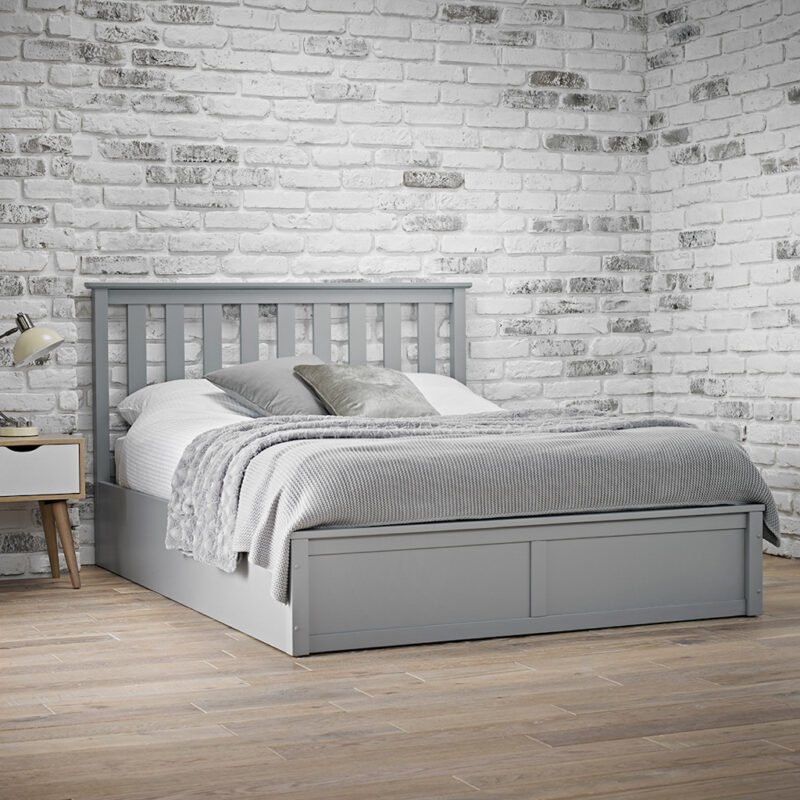
Bed frames in double sizes are the most popular choice for guest rooms and compact main bedrooms. Bed frames in king size suit couples who want more width and a longer bed, but only if the room allows it.
How much space do you need around the bed?
Retail guides vary, but most suggest leaving around 50-60cm at the sides and foot so you can walk round, make the bed and open wardrobes. If the room is tight, prioritise one clear side and the wardrobe door swing. Heavier upholstered frames with deep headboards also take up more room than slim wooden or metal frames of the same mattress size.
A useful trick: mark the frame’s outer footprint on the floor with masking tape, then walk around it. You’ll know within a minute whether it works.
Slatted or solid base: what suits your mattress?
The base is what actually holds your mattress, so it matters as much as the frame’s looks.
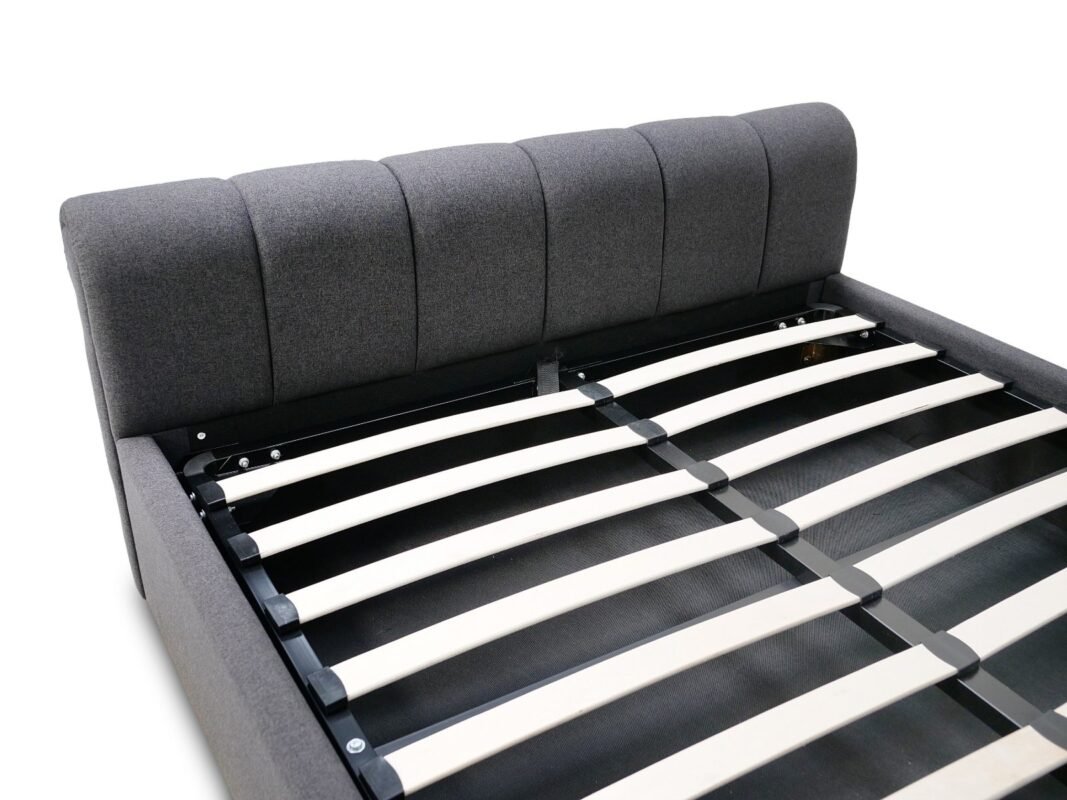
- Slatted bases: let air move beneath the mattress and give a little flex. They suit most pocket sprung and hybrid mattresses. Our pocket sprung mattress guide explains why.
- Solid or platform bases: give firm, even support with no gaps. They’re often found on divan and ottoman beds and work well with memory foam, which likes continuous support.
As a rule, check the frame listing for what base it has and what mattress types it supports. Our guide on how to choose a mattress covers firmness and mattress types if you’re still deciding. Never put a mattress on a frame that is smaller than it, as an oversized mattress can strain the frame.
What signals show a bed frame is well built?
You can’t test a frame in person when you buy online, but the listing and the product photos tell you a lot. Look for:
- Slat support: slats should be evenly spaced with no wide gaps, and a centre support bar helps on double and larger sizes.
- Joints and fixings: solid timber rails, bolted joints and a sturdy headboard attachment last longer than flimsy fittings.
- Weight capacity: check the stated limit, especially if two adults will sleep on it.
- Finish: an even, smooth finish on wood or tidy stitching and firm padding on fabric is a good sign.
- Dimensions: clear measurements for height, length and width, including the headboard.
Standard frame height from floor to the top of the mattress is usually 55-65cm. Lower frames feel modern; higher ones are easier to get in and out of, and leave more room beneath for boxes.
What should you check on assembly, doors and stairs?
A bed that can’t get up the stairs is the most common reason people regret a purchase. Run through this checklist before ordering:
- Measure the width of your front door, hallway turns, stairs and bedroom door.
- Check the packaging dimensions in the product details, not just the finished bed size.
- Look for flat-pack frames if access is tight, as they arrive in smaller pieces.
- Clear a space in the bedroom for unpacking and building.
- Check the assembly information and allow a second pair of hands for larger frames.
- Check delivery availability for your postcode. We deliver free to the UK Mainland, but delivery to Northern Ireland isn’t available, and the Scottish Highlands and offshore postcodes depend on the item and may carry a surcharge.
Which bed frame should you buy for your situation?
Small room or box room
Choose a single or small double in a slim wooden or metal frame, or a storage frame to replace extra furniture. Avoid deep upholstered headboards.
Guest room
A double wooden frame is easy to dress up or down and suits most visitors. Pair it with a mattress of medium firmness that works for most people.
Couples
Go for a king if the room can take it, with a centre support bar and a good weight capacity. If it can’t, a double with proper walking space beats a king that blocks the room.
Renters
Look for a flat-pack frame that comes apart easily, so it moves with you. Wooden and metal frames are the easiest to dismantle and rebuild.
Children’s rooms
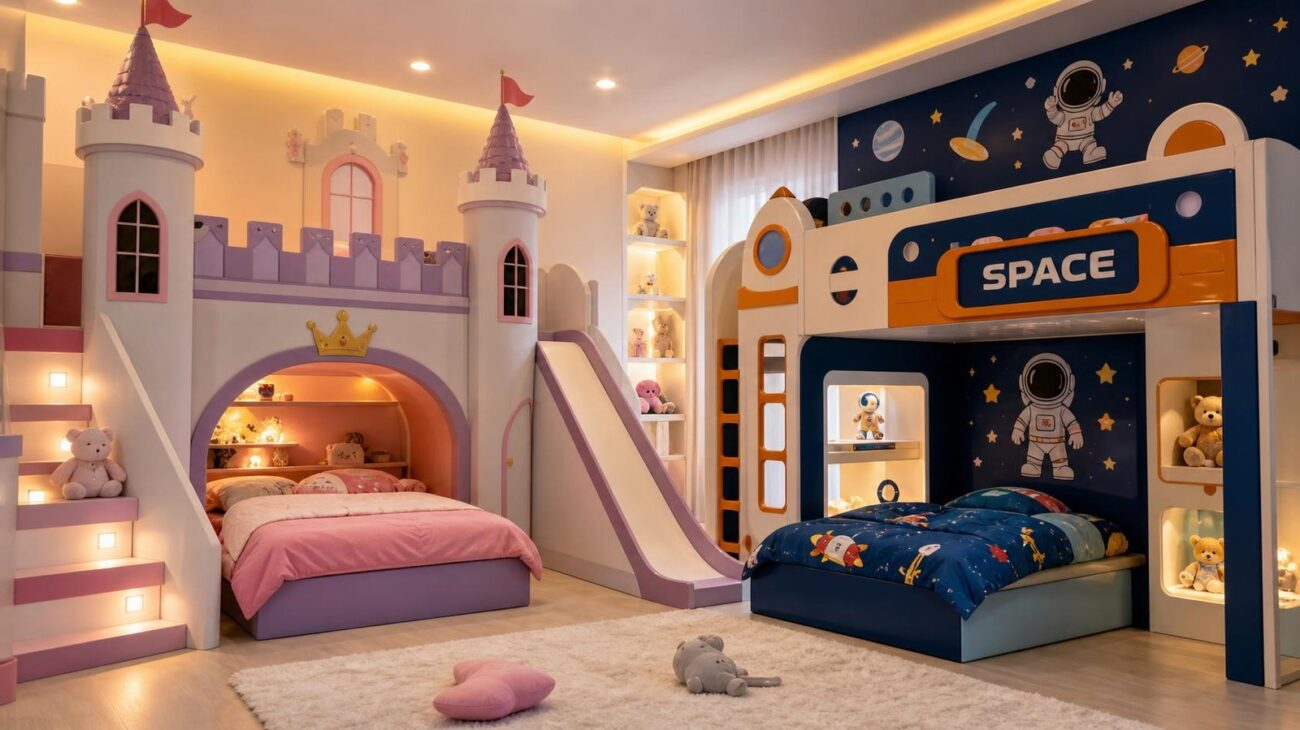
If you’re buying for a child, read our kids beds guide for age and safety checks. Bunks and high sleepers have their own rules.
Ready to choose your bed frame?
Pick your size, match the frame to your room and mattress, and check the build details before you buy. If you spot a lower price elsewhere, our price match guarantee may apply, subject to terms.
Browse the full Furnmart range of Beds, Mattresses, Sofas and Furniture, with delivery across UK Mainland and Multiple Payment Options.
Frequently asked questions
What is the best type of bed frame to buy?
A solid wooden frame with a slatted base is the best all-round choice for most adults. It’s durable, suits most mattress types and works in most room styles. If space is tight, a storage frame may be better value for your room.
Can a mattress be bigger than the bed frame?
No. The mattress should fit inside the frame, and an oversized mattress can put pressure on the sides and damage the frame. Always match the mattress size to the frame it is listed for.
How much space should I leave around a bed?
Aim for around 50-60cm at the sides and foot so you can walk round and make the bed comfortably. In very small rooms, keep at least one side and the wardrobe door area clear.
How high should a bed frame be?
Most UK bed frames put the top of the mattress 55-65cm from the floor. Lower frames look sleeker, while higher ones are easier to get out of and leave space underneath.
Do I need a different mattress for a slatted or solid base?
Not necessarily, but some pairings work better. Pocket sprung and hybrid mattresses do well on slats, while memory foam likes the even support of a solid base. Check the frame listing and your mattress care information.
Will a bed frame fit through my door and up the stairs?
Measure your doorways, hallway turns and stairs, then compare them with the packaging size in the product details. Flat-pack frames arrive in smaller pieces and are usually easier to get into awkward spaces.