
Blog
Kids Beds With Storage: Best Options for Small Rooms

Key takeaways
- Ottoman-style kids beds give the most hidden space for toys and bedding in a standard single-bed footprint.
- Cabin beds and mid sleepers suit older children who need drawers, cupboards or a desk in a small room.
- Storage bunk beds are the space-saver for shared rooms, but always check the manufacturer's minimum age for the top bunk.
- Measure ceiling height, floor space and the clearance needed to open drawers or lift a base before you buy.
- Check doorways and stairs before delivery, and allow time for assembly.
The best kids beds with storage depend on your child’s age and room. Ottoman-style beds suit most single rooms and give the most hidden space, cabin beds and mid sleepers add drawers and desk space for older children, and storage bunk beds make shared rooms work. Measure your ceiling and floor space first.
If you’re trying to fit a growing child, their toys and their bedding into a small room, the bed is the best place to start. Below, we rank the main types by the problem each one solves, so you can match the bed to your child’s age, your room and your storage needs.
Which kids beds with storage suit small rooms?
The right choice depends on what’s causing the clutter. Use this table as a quick pick, then read the sections below for the detail.
| Your situation | Best bed type | Storage you get | Main trade-off |
|---|---|---|---|
| Lots of toys and spare bedding, standard ceiling | Ottoman-style bed | One large space under the mattress | Needs clear space to lift the base |
| Older child needing somewhere to study | Cabin bed or mid sleeper | Drawers, cupboards, shelves or desk | Needs enough ceiling height |
| Two children, one room | Storage bunk bed | Drawers or storage steps | Top bunk has a minimum age |
| Tight floor space beside the bed | Lift-up storage | Large, single space | Less organised than drawers |
| Want easy-to-reach, sorted storage | Drawer bed | Separate pull-out drawers | Needs side or end clearance |
You can browse all of these in our Kids Beds range, or see the wider selection of Beds With Storage.
Are ottoman-style kids beds a good choice for toys and bedding?
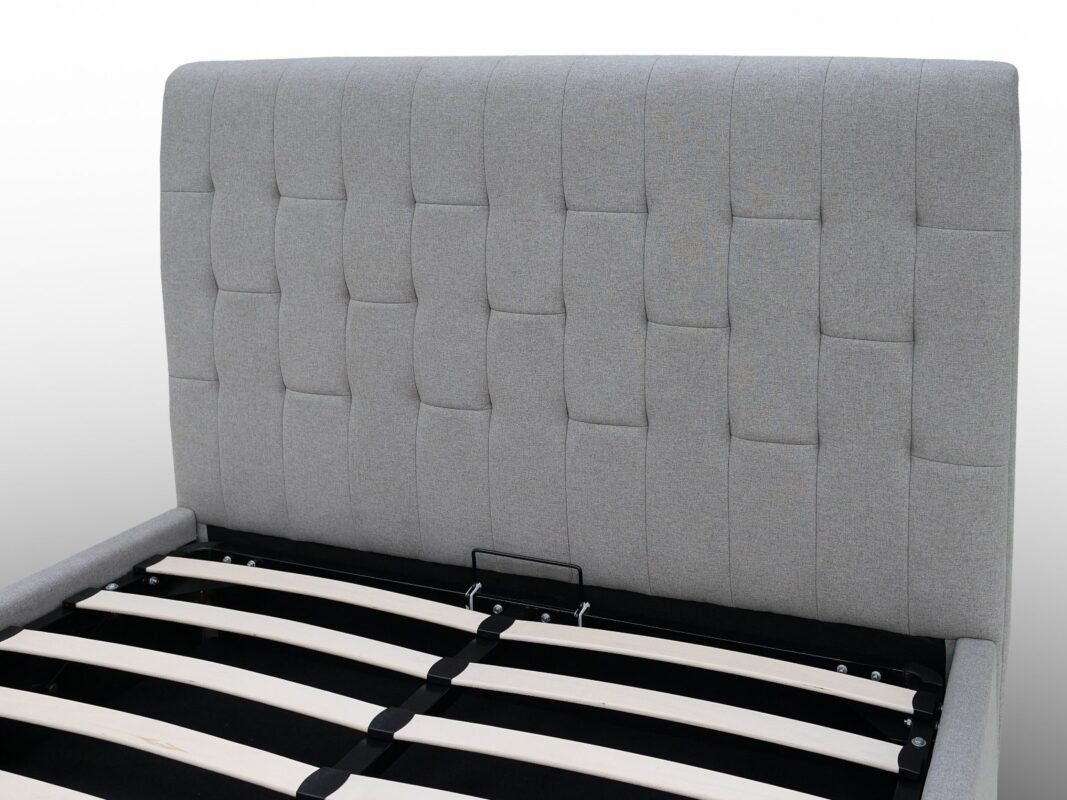
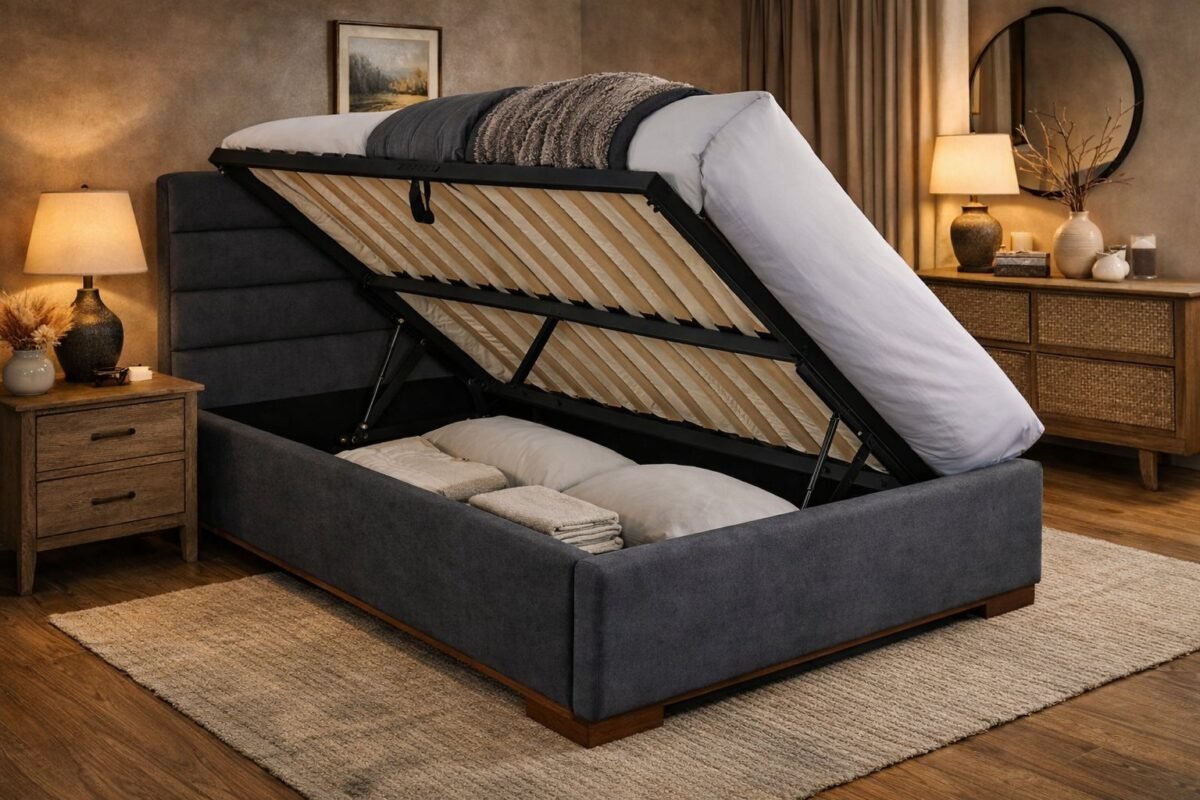
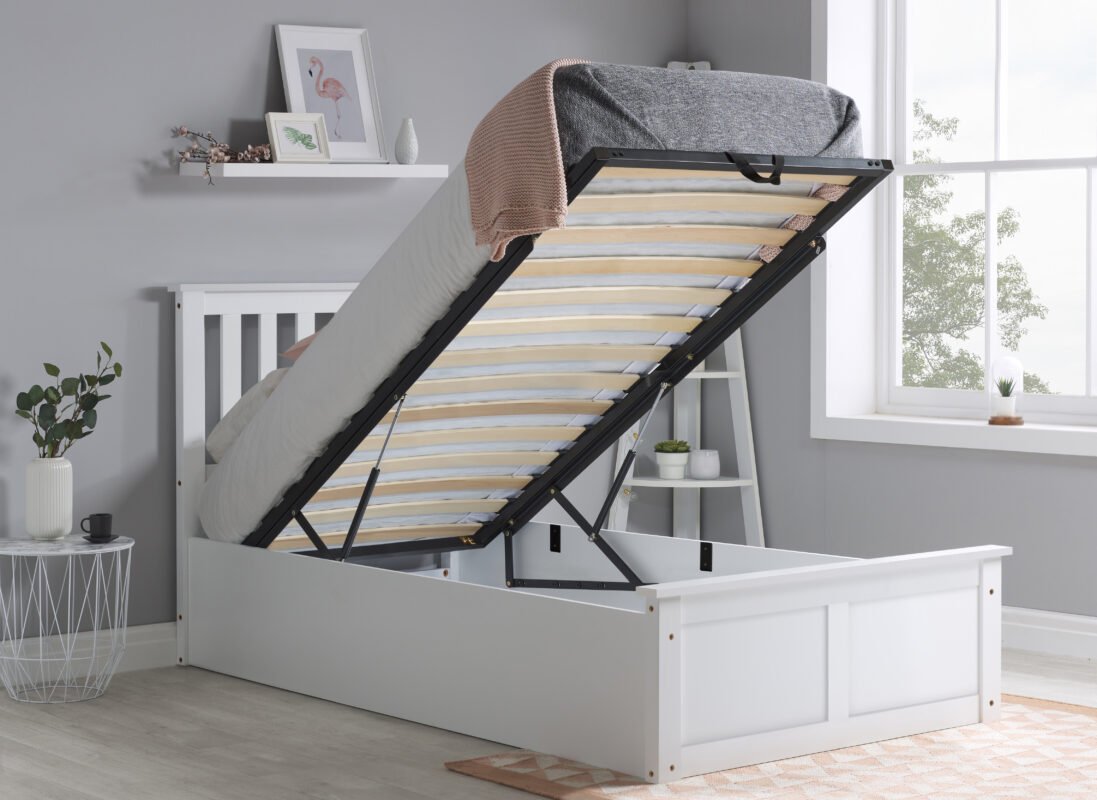
Yes, if you want the most storage without adding to the footprint of the bed. The whole base lifts up to reveal a storage space the full size of the mattress. Most use a gas lift, which is a piston that holds the base up so you don’t have to prop it.
This is the best option for bulky items that are hard to organise: duvets, spare pillows, soft toys, board games and seasonal clothes. It also works well for children’s rooms that need to look tidy quickly, as you can drop things in and close the lid.
Who ottoman beds suit
- Children from toddler age through to teens, depending on the bed size.
- Rooms with a standard ceiling where a raised bed isn’t needed.
- Families who want to hide things away rather than organise them.
What to watch for
- You need clear floor space at the foot or side to lift the base, so check how far it opens.
- Heavy items at the bottom make the base harder to lift, so keep the heaviest things light and low.
- Storage is one big space, so small items can get buried without boxes or bags.
If you’re new to the style, our Ottoman Beds buying guide explains how the lift mechanism works and what fits inside.
Do cabin beds and mid sleepers with storage work for older kids?
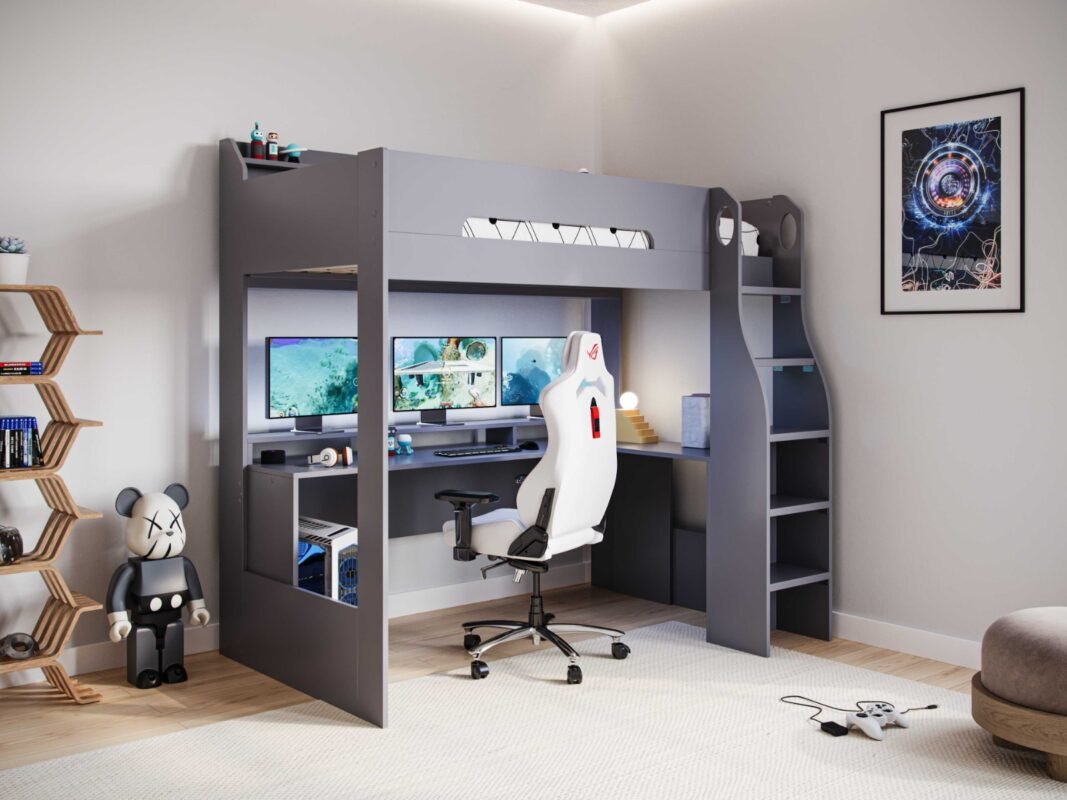
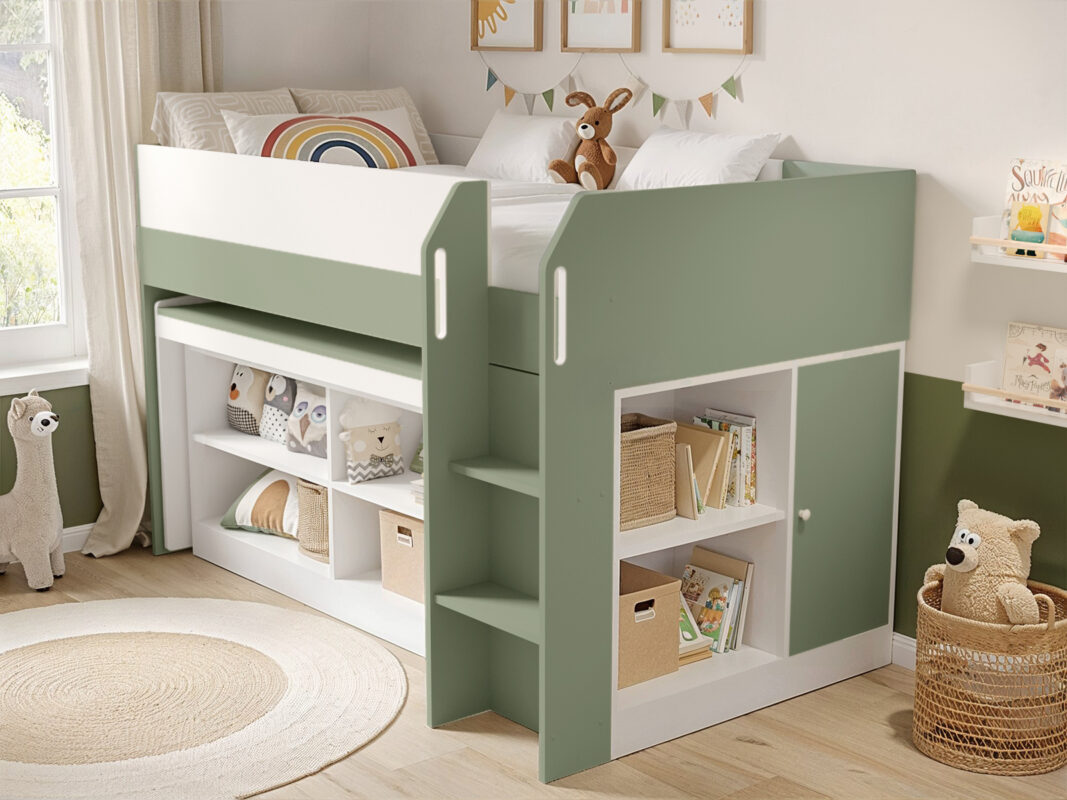
They do, and they’re often the smartest use of vertical space. A cabin bed has the sleeping platform raised slightly with storage or a desk beneath. A mid sleeper sits a little higher, which leaves more room underneath for a desk, wardrobe, shelves or a play area.
The storage on these beds varies by design. Some have built-in drawers in the steps, some have cupboards or shelving along the side, and some pair the bed with a desk. That makes them popular for children who need homework space as well as somewhere to put clothes and books.
The trade-off is height. Because the sleeping platform is raised, you need a ceiling with enough clearance and a child old enough to climb safely. Our guide to cabin beds vs high sleepers explains the difference in more detail, and you can browse the full range of Cabin Beds & Midsleepers.
Are bunk beds with storage steps worth it for shared rooms?
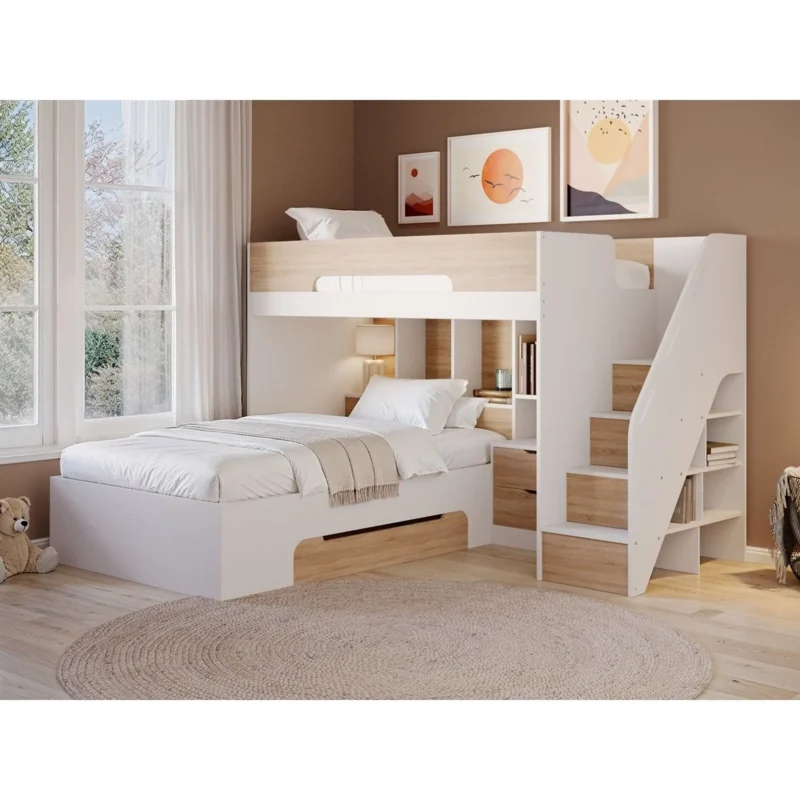
For two children in one room, yes. A bunk bed stacks two sleeping spaces into one footprint, and the storage steps or built-in drawers use the space that would otherwise be wasted. That leaves floor space free for play.
Storage bunks usually include drawers in the steps or underneath, which is handy for pyjamas, school uniform or toys. Some designs go further with a triple sleeper layout for three children, such as the Polaris Storage Bunk Bed, and you can compare more in our Bunk Beds category.
The big thing to check is age. Manufacturers set a minimum age for the top bunk, so read the product page and instructions before you decide who sleeps where. Independent guides such as this bunk bed guide on ages, sizes and safety are a useful extra read, but the manufacturer’s guidance always comes first.
Drawer beds vs lift-up storage: which is better?
It comes down to how you like to organise things. Drawer beds have separate pull-out drawers, so everything has a home and is easy to reach without lifting anything. Lift-up storage gives you one large space, which is better for bulky items.
- Choose drawers if you want sorted, accessible storage for clothes, books and smaller toys, and you have space beside or at the end of the bed to open them.
- Choose lift-up if you have bulky bedding or toys and little room around the bed, as you only need space to raise the base.
If you’re torn, you can see how the styles compare in our guide to ottoman beds vs divan and drawer beds, or look at the Underbed / Storage Drawer range.
What age, safety and mattress height checks should you make?
Start with the manufacturer’s age guidance, which you’ll find on the product page and in the instructions. Raised beds such as cabin beds, mid sleepers, high sleepers and bunks all come with guidance on who they suit. Follow it, even if your child is tall or confident on ladders.
Before you buy, run through this checklist:
- Age and weight: check the recommended age range and any weight limit.
- Guard rails: look for guard rails on raised sleeping platforms, and check how high they sit above the mattress.
- Mattress depth: use a mattress that suits the bed’s specified depth, so the rails stay effective. Thicker mattresses can reduce the protection from the guard rail.
- Climbing access: choose steps or a ladder that suits your child’s confidence.
- Fixings: tighten all bolts at assembly and recheck them from time to time.
Mattress size matters too. Most single kids beds take a standard UK single mattress, around 90 x 190cm, while small singles are around 75 x 190cm. Always check the size in the product details, as some novelty and compact designs differ.
How do you measure ceiling height and floor space?
Measuring takes five minutes and prevents the most common problems. Do it before you choose.
- Ceiling height: measure from floor to ceiling in the spot where the bed will go. For raised beds, leave enough headroom for your child to sit up in bed comfortably.
- Floor footprint: measure the area for the bed length and width, then compare with the product dimensions.
- Opening clearance: allow room for drawers to slide out or for an ottoman base to lift up. A tape measure on the floor shows how much space you’ll lose.
- Obstacles: note radiators, sloping ceilings, light fittings and window sills, which can all block a raised bed.
- Walkway: keep a clear path around the bed so the room still feels usable.
For a cabin bed or mid sleeper, our mid sleeper guide goes into more detail on headroom and layout.
What should you know about assembly and delivery?
Storage beds are bulky, so plan ahead. Most pieces arrive flat-packed in several boxes, and assembly takes time, especially for bunks and beds with built-in drawers. A second pair of hands helps, particularly when positioning the frame.
- Measure access: check doorways, hallways and stairs, as boxes can be long and heavy.
- Clear the room: move furniture before assembly so you can lay out the parts.
- Check the parts: use the instructions to tick off fittings before you start.
- Build in place: raised and bunk beds are easier to assemble in the room where they’ll stay.
At Furnmart, delivery to the UK Mainland is free, and our price match guarantee (subject to terms) is there if you spot the same item for less elsewhere. Delivery to Northern Ireland isn’t available, and Scottish Highlands and offshore postcodes depend on the item and may carry a surcharge. Our UK-based support team can help by phone or email if you’re unsure.
Which kids bed with storage should you choose?
Match the bed to the problem. If it’s bulky toys and bedding, go for an ottoman-style bed. If your child needs study space, choose a cabin bed or mid sleeper. For two children in one room, look at a storage bunk bed, and if you like everything sorted and reachable, a drawer bed will suit best.
Whichever you pick, follow the manufacturer’s age guidance, measure carefully and allow time for assembly. Ready to start? Shop Furnmart Kids beds with storage. Browse the full Furnmart range of Beds, Mattresses, Sofas and Furniture, with delivery across UK Mainland and Multiple Payment Options.
Frequently asked questions
What is the best kids bed with storage for a small bedroom?
An ottoman-style bed is usually the best all-rounder, as it adds large storage without increasing the bed’s footprint. If your child also needs a desk, a cabin bed or mid sleeper can do more in the same space. Check the ceiling height before choosing a raised bed.
What age is suitable for a bed with storage?
It depends on the bed type. Ottoman and drawer beds suit a wide range of ages, but raised beds such as cabin beds, mid sleepers and bunks have manufacturer age guidance. Always check the product page and instructions rather than relying on a general rule.
Are kids beds with drawers or ottoman storage better?
Drawers are better for sorted, easy-to-reach items like clothes and books. Ottoman storage is better for bulky items like duvets and large toys. Think about the space around the bed too, as drawers need room to slide out and ottoman bases need room to lift.
Can you fit a bunk bed with storage in a small room?
Yes, a bunk bed can be one of the most space-efficient choices for two children, as it stacks two beds in one footprint. Measure ceiling height first, and check the manufacturer’s minimum age for the top bunk. Storage steps or drawers then make use of the space underneath.
Do kids beds with storage need assembling?
Most arrive flat-packed and need assembling at home. Beds with drawers, bunks and raised designs take longer, so allow time and ideally a second person to help. Measuring doorways and stairs beforehand makes sure the boxes can be carried into the room.
Does Furnmart deliver kids beds across the UK?
Furnmart offers free delivery to the UK Mainland. Delivery isn’t available to Northern Ireland, and Scottish Highlands and offshore postcodes depend on the item and may involve a surcharge. If you’re unsure about your postcode, our UK-based support team can help.