Blog
Mid Sleeper Beds Explained: Best Options for UK Kids’ Rooms


If half-term gave you time to tidy and rethink your child’s bedroom, you’ve probably come across the best mid sleeper bed options as a way to free up floor space. In this guide we explain exactly what a mid sleeper is, how it compares to a high sleeper or bunk bed, what age it suits, and how to pick between a desk, storage or a simple frame depending on your child’s room and age.
What is a mid sleeper bed?
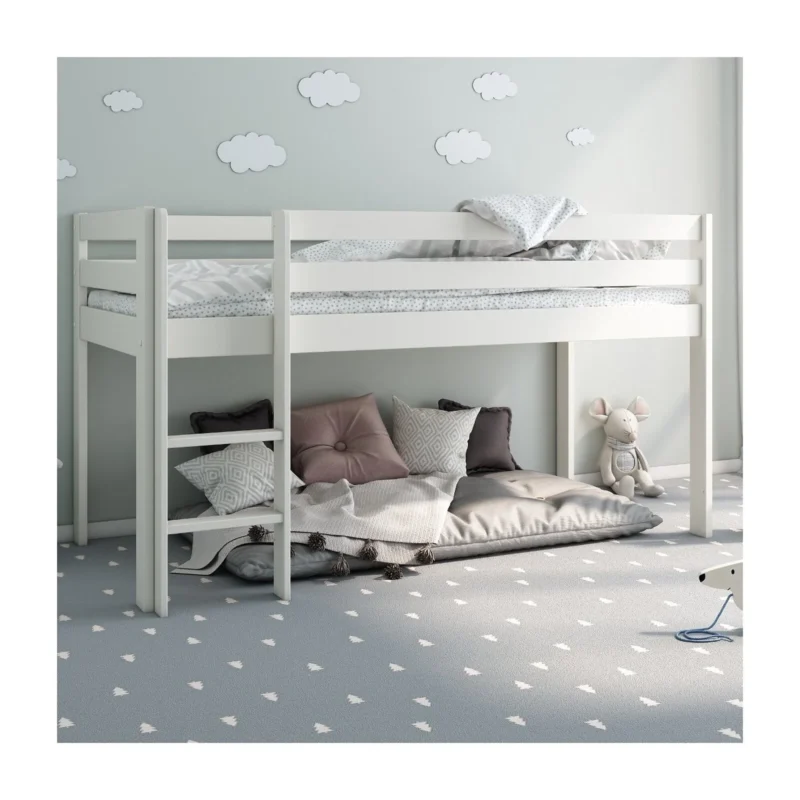
A mid sleeper bed raises the mattress off the ground, usually to somewhere between 110cm and 140cm high, leaving a useful gap underneath. That gap can be left open for play, fitted with a desk, or built around drawers and shelving for storage.
It sits in the middle of the raised-bed family. A low cabin bed typically gives 70cm to 110cm of clearance underneath, which suits drawers and dens for younger children. A high sleeper goes much taller again, often with a wardrobe or full desk set-up below. A mid sleeper is the in-between option: enough height to be genuinely useful underneath, without the climb or ceiling clearance a high sleeper demands.
Mid sleeper vs high sleeper vs bunk bed
It’s easy to muddle these three up, so here’s a quick comparison.
| Bed type | Typical height | Best for | Space underneath |
|---|---|---|---|
| Cabin bed | 70–110cm | Younger children, small rooms | Drawers, low storage |
| Mid sleeper | 110–140cm | School-age children | Desk, storage or play space |
| High sleeper | 150cm+ | Older children, confident climbers | Desk, wardrobe, full study zone |
| Bunk bed | Two stacked beds | Siblings or sleepovers | None — second bed instead |
The key difference between a mid sleeper and a bunk bed is that a bunk provides two sleeping spaces stacked on the same footprint, while a mid sleeper has just one bed with open space below for everything else. If you’re weighing up a cabin bed against a high sleeper specifically, our cabin bed vs high sleeper comparison goes into more detail.
What age is a mid sleeper bed suitable for?
Most mid sleeper beds are recommended from around age 6 upwards. By this age, children have usually developed the balance and coordination to use a ladder safely and get in and out of bed confidently on their own.
There’s no fixed upper age limit. Many children happily use a mid sleeper until age 10 or beyond. The two things to watch for are whether they’ve outgrown the ladder, and whether there’s still enough headroom between the mattress and the ceiling when they sit up. Once either of those feels tight, it’s time to think about a standard single or a high sleeper instead.

How much space and ceiling height do you need?
Before buying, measure the room carefully rather than guessing. A few practical pointers:
- Ceiling height: most UK homes have around 2.1m to 2.3m of ceiling height, which is normally enough for a mid sleeper — but always measure the exact spot the bed will sit, especially in loft or attic rooms with sloped ceilings.
- Floor space: allow roughly 50–60cm of clear space in front of the ladder, plus room for any drawers underneath to open fully.
- Room size: a single bed footprint generally works well in rooms of around 2.5m x 3m or larger, though smaller box rooms can still work if the layout is planned carefully.
- Delivery access: mid sleepers typically arrive flat-packed in a few boxes. If you’re fitting one into an upstairs bedroom with a tight staircase or landing, it’s worth checking box dimensions before you order.
It’s also worth remembering that UK single mattresses are usually 90cm x 190cm, while some European-style frames use 90cm x 200cm. Check which size your chosen frame takes before buying bedding or a replacement mattress.
Mid sleeper with desk or storage: which is best?
This really comes down to what your child needs most right now, and what they’re likely to need in a year or two.
Best mid sleeper with desk
A desk underneath gives your child a dedicated spot for homework, drawing or a laptop, without taking up extra floor space elsewhere in the room. This tends to suit children from around age 7 upwards who are starting to need a proper work area, and it can save you buying a separate desk later.
Best mid sleeper with storage
If floor space and tidiness are the priority, a mid sleeper with built-in drawers or shelving underneath is hard to beat. It keeps clothes, books and toys contained in one footprint, which is especially handy in smaller bedrooms or shared rooms. A mid sleeper with storage also tends to grow well with a child — as they get older they’ll likely need more storage for clothes and school things rather than less.
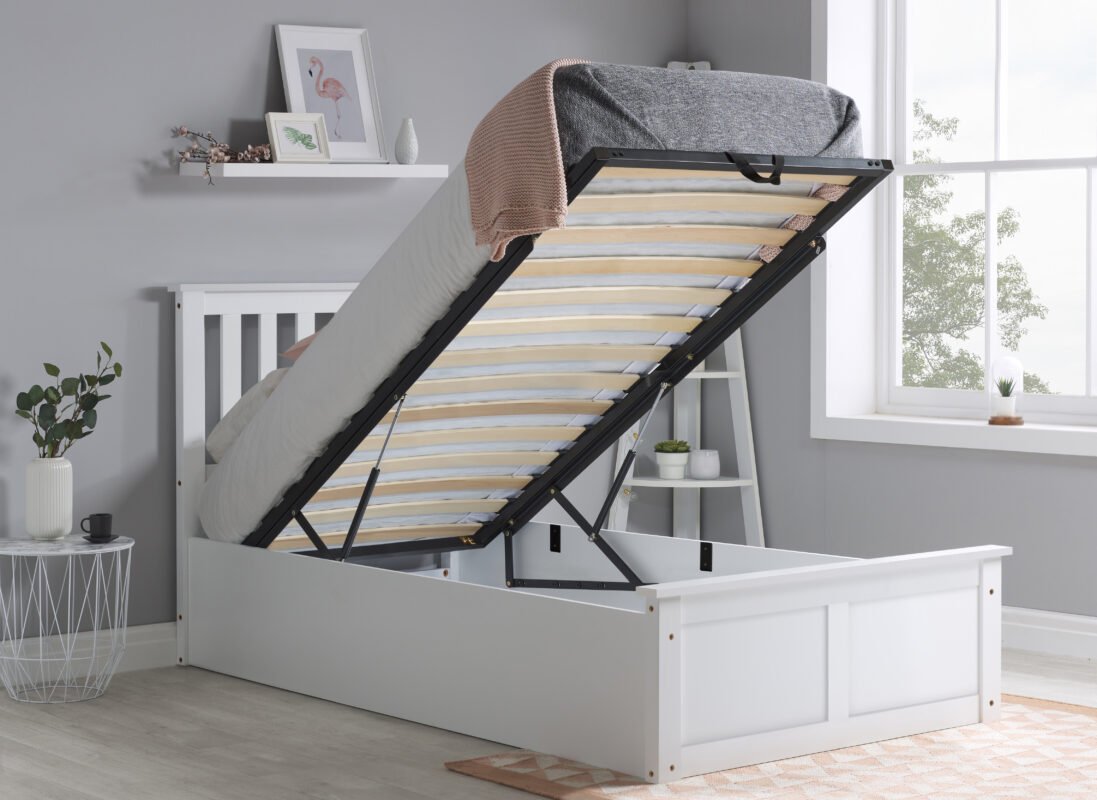
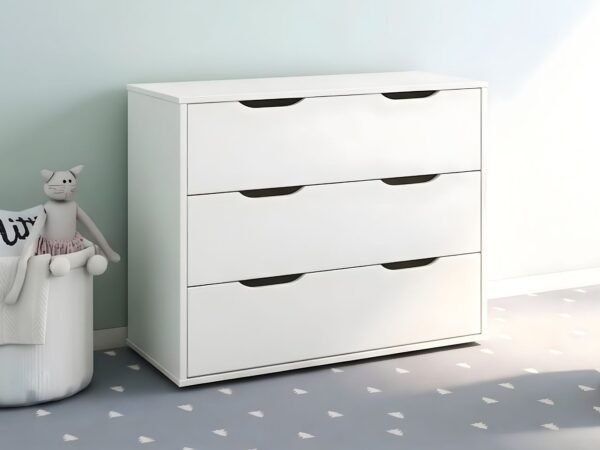
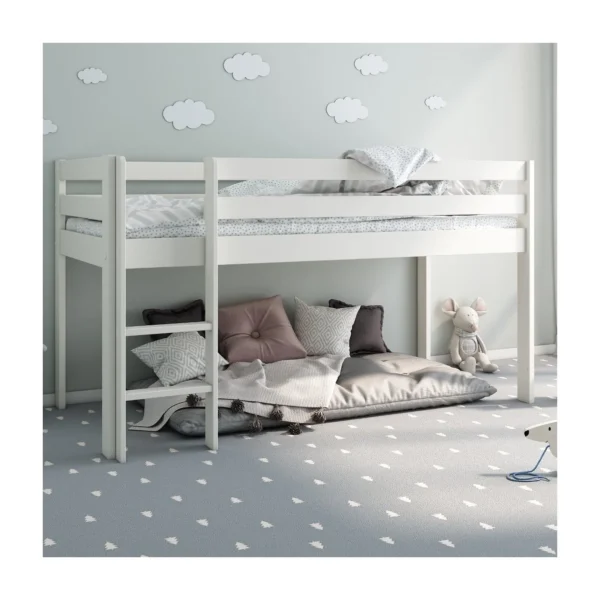
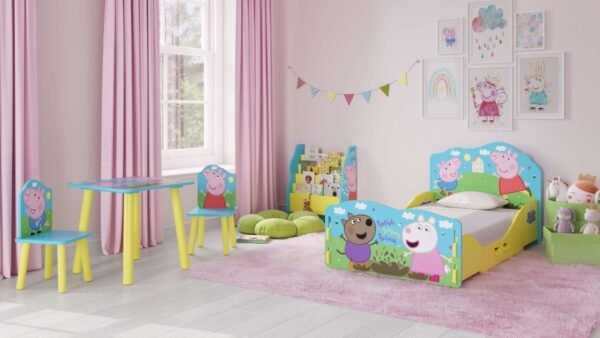
If you’d rather keep the space underneath completely open for a play tent, beanbag or reading corner, a plain frame like the Nora Solid Wood Mid Sleeper Bed gives you that flexibility, with a solid pine frame and fixed ladder in white or grey. You can always add a freestanding option like the Nora Chest of 4 Drawers White nearby for extra storage, or a Peppa Pig Table & Chairs set underneath for younger children who want a play space rather than a desk.
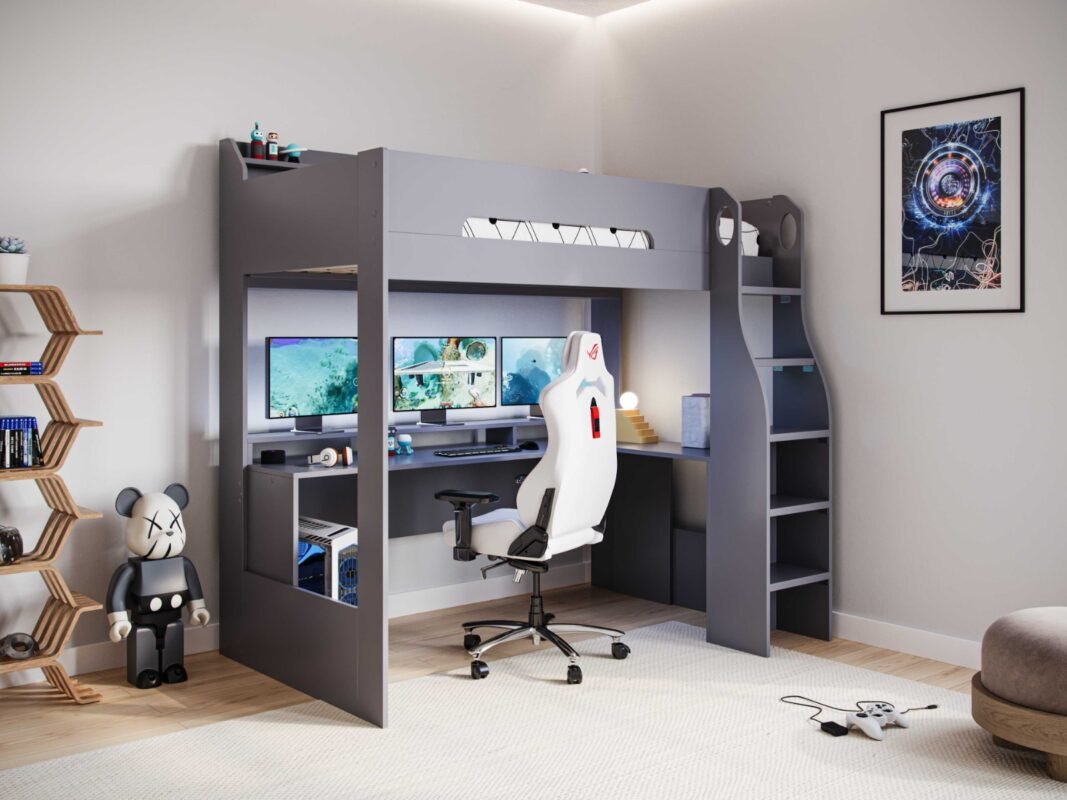
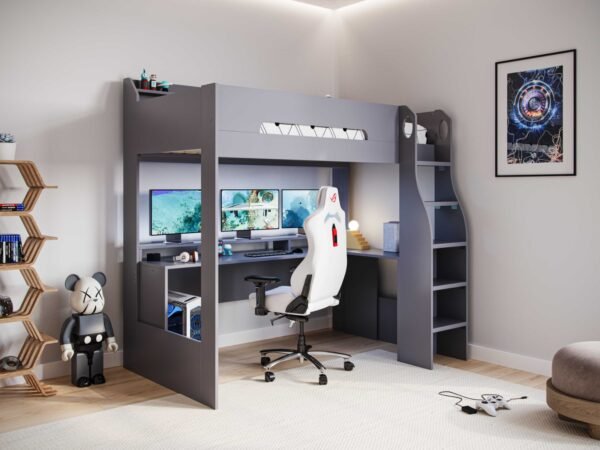
For families needing more height and a full desk and storage combination, the Skyhigh Gaming High Sleeper Anthracite raises the sleeping area further to free up a generous zone below for a desk, storage or play area — worth considering once a child has outgrown a mid sleeper. If you have two children sharing a room, a Bea Bunk Bed can be a more space-efficient alternative to two separate mid sleepers. Browse our full Cabin Beds & Midsleepers range to compare options side by side.
Shop the look
Safety and build quality checklist
Raised beds need to meet proper safety standards, so it’s worth checking a few things before you buy.
- British safety standard: look for beds built to BS EN 747, the UK regulation covering structural strength and safety for loft-style beds.
- Guard rails: rails should sit at least 16cm above the mattress surface, with gaps no wider than 7.5cm so a child can’t slip through.
- Mattress depth: most mid sleepers are designed for mattresses around 15–20cm thick. A thicker mattress can reduce the effective guard rail height, so check the manufacturer’s recommendation.
- Ladder design: the ladder should be securely fixed to the frame, with wide, flat rungs rather than thin round ones for a more stable footing — angled ladders can feel steadier for younger or less confident climbers than vertical ones.
- Ongoing checks: bolts and fittings can loosen over time with everyday use, so it’s worth giving the frame a quick visual check every so often and tightening anything that’s worked loose.
All beds in our Cabin Beds & Midsleepers range come with free UK mainland delivery, and you’ll find full dimensions and ladder details on each product page to help you check fit before ordering.
Frequently asked questions
What’s the difference between a mid sleeper and a cabin bed?
A cabin bed sits lower, usually with 70–110cm of clearance underneath, which suits drawers and younger children. A mid sleeper is taller, typically 110–140cm, giving more room underneath for a desk or storage.
Can adults use mid sleeper beds?
Mid sleepers are designed and weight-tested for children’s use. They’re not intended as adult or guest beds, so a standard single or double would be a safer choice for grown-ups.
Do mid sleeper beds take a standard single mattress?
Many do, but always check the frame’s specification first. Some use the UK standard 90cm x 190cm size, while others are built for a 90cm x 200cm mattress.
Is a mid sleeper safe for a child who shares a room?
Yes, as long as it’s sized correctly for the child using it and the room has enough floor space around the ladder. For two children, a bunk bed is sometimes a more space-efficient option, as it adds a second sleeping space rather than storage.
How do I know if my ceiling is high enough?
Measure the exact spot where the bed will go, including the height a child can safely sit up without their head touching the ceiling. Around 2.1m to 2.3m of ceiling height is usually enough, but sloped ceilings in loft rooms need extra care.
Ready to compare styles side by side? Head over to our Cabin Beds & Midsleepers category, or browse our wider kids’ furniture range for storage and desk pieces to match.