
Blog
How to Clean a Fabric Bed (and Keep Dust and Squeaks Away)


Key takeaways
- Fabric beds can collect dust and marks like any bedroom furniture, but a quick weekly routine keeps them fresh.
- Always check the care label or product page first, and test any cleaner on a hidden area.
- Use a soft brush attachment on low suction, or a soft brush or cloth for delicate and velvet fabrics.
- Blot spills rather than rubbing, and let the fabric dry fully before remaking the bed.
- Most squeaks come from loose bolts, slats or joints, and are usually fixed with a screwdriver and a few felt pads.
To clean a fabric bed, vacuum the headboard and frame each week with a soft brush attachment on low suction, blot spills straight away with a clean damp cloth, and spot-clean marks with a mild upholstery cleaner. Test it on a hidden patch first. Here is how to clean fabric bed frames without damaging them.
Do upholstered beds get dirty or dusty?
Yes, they can. Fabric beds get dusty and dirty in the same way as any other bedroom furniture. Headboards pick up skin oils and hair products, and the sides can collect dust and the odd scuff from vacuum cleaners and bedding.
If you are wondering whether upholstered beds collect dust more than wooden ones, the honest answer is that textured fabric can hold fine dust a little longer than a smooth painted surface. The difference is small and easy to manage. A few minutes with a brush each week stops it building up.
It also helps to know where dust mites actually live. They are found in all UK homes, and they gather mostly in mattresses and bedding rather than on the frame. So caring for your bed means looking after the whole set-up, not just the fabric.
What do you need to clean a fabric bed?
You do not need specialist kit. Most of it is probably in the cupboard already.
- A vacuum cleaner with a soft brush or upholstery attachment for regular dusting.
- A soft clothes brush for delicate or deep-pile fabrics, where nozzles can mark or flatten the surface.
- Two or three clean, white or light cloths, so dye cannot transfer onto the bed.
- A mild upholstery cleaner that suits your fabric, or a little mild washing-up liquid in cool water.
- A screwdriver or Allen key for tightening fixings later on.
Skip fabric softener. It can leave a residue that attracts more dirt and dust. Avoid harsh bleach or strong household sprays too, as they can mark or fade the fabric.
Should you check the care label first?
Yes, always. Fabrics differ, so check the care label or the product page before you reach for any cleaner. Many upholstery labels use a simple code:
| Code | What it means | What to use |
|---|---|---|
| W | Water-based cleaning is fine | Mild upholstery cleaner or diluted washing-up liquid |
| S | Solvent-based cleaner only | Dry-cleaning solvent, used in a ventilated room |
| W/S | Either type is suitable | Start with the gentler water-based option |
| X | No liquids at all | Brushing or light vacuuming only |
If there is no label, look at the product page or the paperwork that came with the bed. If you are still unsure, treat the fabric as delicate and stick to dry brushing until you have checked.
How to clean fabric bed frames step by step
Set aside around 15 minutes. Strip the bed first so you can reach the whole frame.
1. Remove bedding and mattress covers
Take off the sheets, throws and pillows. Wash bedding at 60°C or above if the care labels allow it, as that is what UK guidance on dust mites advises. Cooler washes shift allergens for a while, but the mites can survive.
2. Dust the headboard, sides and base
Use the soft brush attachment on low suction and work in straight lines from top to bottom. Pay attention to seams, buttons and any channels in the headboard, where dust settles. On velvet or other deep-pile fabrics, use a soft clothes brush or a dry cloth instead. Nozzles can crush the pile.
3. Clean the corners and legs
Use a crevice tool for the joins between the headboard, side rails and legs. Wipe wooden or metal feet with a damp cloth, then dry them.
4. Freshen the fabric if needed
If the bed smells a little stale, sprinkle baking soda lightly over the fabric. Leave it for a few hours, then brush or vacuum it off gently. It absorbs moisture and odours without adding any water.
5. Let everything dry and air
Open a window and leave the bed bare for a short while before remaking it. Never put bedding back on damp fabric.

How do you spot-clean marks and stains?
Speed matters. The sooner you act, the easier a mark comes out.
- Blot, never rub. Press a clean cloth onto the spill to lift as much as you can. Rubbing pushes the stain deeper and can fray the fibres.
- Test in a hidden area. Try your cleaner on the underside of a rail or the back of the headboard. Wait until it dries to check for colour change or water marks.
- Apply sparingly. Dampen a cloth with the cleaner, not the bed itself, and dab from the outside of the mark towards the centre.
- Rinse with a second cloth. Dab with a cloth dampened with plain water to lift out any soap.
- Dry gently. Pat with a dry towel and let it air-dry. Avoid hairdryers on high heat, which can set stains or shrink the fabric.
To avoid water rings, clean the whole panel evenly from seam to seam rather than a single small patch. Set-in stains, a lingering musty smell or anything that comes back after cleaning are good reasons to call a professional upholstery cleaner.
How can you reduce dust around a fabric bed?
Cleaning the fabric is only half the job. Much of the dust in a bedroom settles around the bed, so these habits help the most:
- Vacuum under the bed every week or two. If there is a gap beneath the frame, a long crevice tool reaches the back wall.
- Clear the space under the bed if you can. Fewer boxes means fewer places for dust to hide.
- Air the room daily. Mites like warm, humid conditions, so open the window for 15 to 20 minutes and pull the duvet back to let the mattress breathe.
- Wash bedding regularly and dust surfaces with a damp cloth rather than a dry duster, which can just move dust around.
Looking after ottoman and storage beds
If your bed has built-in storage, such as the Oxford Grey King Size Ottoman Bed or our Beds with Storage, give the storage space the same attention. Lift the lid every month or two, vacuum the inside and wipe it with a dry cloth.
Store items in lidded boxes, zipped bags or vacuum bags so dust stays off your linen and spare bedding. Make sure everything is completely dry before it goes in, to avoid any damp smell.

Why do upholstered beds squeak, and how do you fix it?
Do upholstered beds squeak? Sometimes, but the fabric is rarely the cause. Squeaks usually come from the frame underneath: parts rubbing together as you move. This is true of wooden, metal and fabric beds alike.
Work through these checks in order:
- Tighten all bolts and fixings. Check the headboard, side rails and legs. Fixings can loosen over time with normal use, so a quarter turn with a screwdriver or Allen key often solves it. Do not over-tighten.
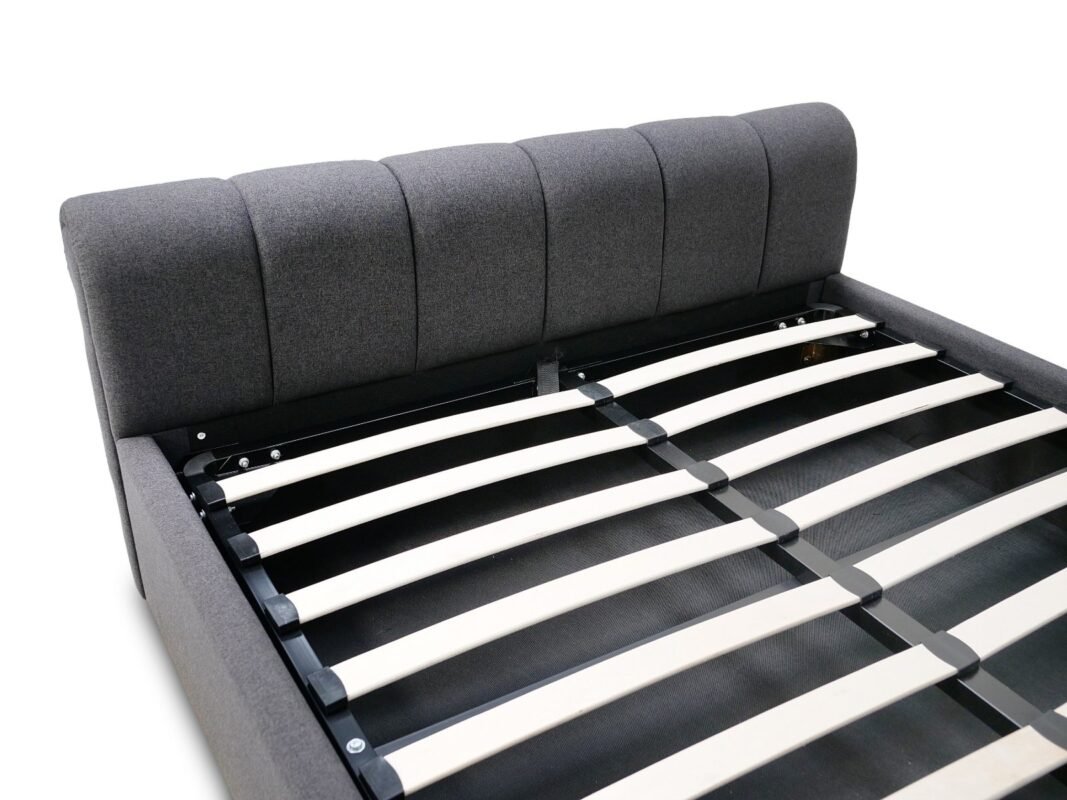
- Check the slats. Make sure each slat sits in its holder and none are cracked or shifted. Reseat any that have moved.
- Look at the centre support. On larger beds, centre legs should touch the floor evenly. Adjust or reposition them if the frame rocks.
- Add felt pads. Stick small self-adhesive felt pads where wood meets wood or metal, such as on the slat ends and the top of the rails. This stops the rubbing noise.
- Check the mattress fit. A mattress that is too small or too large for the frame can shift and creak. Our Bed Frames pages list the internal dimensions so you can match your mattress.
If one spot still creaks, ask someone to sit on the bed and move around while you listen. It is usually easy to pinpoint, and a pad or a tighter bolt there does the trick.
How often should you clean a fabric bed?
| Task | How often |
|---|---|
| Light dusting with a soft brush | Weekly |
| Vacuuming under the bed | Every 1 to 2 weeks |
| Washing bedding | Regularly, at 60°C if the label allows |
| Tightening bolts and checking slats | Every few months |
| Deeper clean of the fabric | Every 3 to 6 months, or when needed |
| Vacuuming inside storage | Every 1 to 2 months |
Choosing a fabric bed that is easy to look after
If you are still choosing, a few features make life easier. Look for a tighter weave or a smooth finish if you want less dust to cling. A headboard with fewer buttons and seams is quicker to brush. Storage beds help too, because they cut the clutter that otherwise ends up under the frame.
Our Fabric Beds range includes a mix of colours and styles. Each product page lists the fabric and dimensions, so you can check what suits your room and your cleaning routine. For a mix of wood and upholstery, the Hampden Smoked Oak Storage Bed with Fabric Headboard pairs a fabric headboard with a hard-wearing frame.
Final thoughts
A fabric bed does not need much fuss. A weekly brush, quick action on spills, a regular check of the fixings and a bit of fresh air in the room keep it looking and sounding good for years. Always check the care label first, since fabrics differ.
Browse the full Furnmart range of Beds, Mattresses, Sofas and Furniture, with delivery across UK Mainland and Multiple Payment Options.
Frequently asked questions
Can I use a steam cleaner on a fabric bed frame?
Only if the care label specifically allows it. Heat and moisture can shrink or discolour some fabrics and soak the padding underneath. If your label shows an X code or you are unsure, stick to dry brushing and light spot-cleaning.
Can I clean a fabric bed frame without removing the mattress?
You can clean the headboard and visible sides with the mattress in place, but you will reach the base and corners more easily if you lift or move it. Lifting the mattress also lets you check slats and fixings at the same time.
Is baking soda safe to use on upholstered beds?
Baking soda is generally gentle and works well to absorb odours. Sprinkle a thin layer, leave it for a few hours, then brush or vacuum it off. Test a hidden patch first, particularly on dark or delicate fabrics.
Why does my fabric bed still smell after cleaning?
The fabric or padding may still be damp, or the smell may be coming from the mattress or bedding. Let everything dry fully with a window open, wash the bedding, and air the mattress. If a musty smell persists, consider a professional upholstery clean.
Do fabric beds get dusty more quickly than wooden beds?
Not dramatically. Textured fabric can hold fine dust a little longer than smooth wood, but a weekly dusting with a soft brush keeps it under control. The mattress, bedding and floor space under the bed matter just as much.