Blog
Living Room Rugs and Lamps: How to Layer a Cosy Room

Key takeaways
- Choose living room rugs big enough for at least the front legs of your Sofas and chairs to sit on them, so the seating area feels connected.
- Common UK sizes are 120x170cm and 160x230cm for small rooms, and 200x290cm or 240x340cm for medium to large rooms.
- Layer your lighting with a ceiling light, table lamps and a floor lamp rather than relying on one bright overhead fitting.
- Warm white bulbs and shades at the right height make living room lamps feel soft rather than harsh.
- Most of this works in a rental, because rugs and lamps are easy to move and need no drilling.
The best living room rugs are large enough for the front legs of your Sofa and armchairs to rest on, with 25-60cm of bare floor showing around the edge. Add warm, layered lighting from table and floor lamps, and the whole seating area feels connected, softer and more inviting.
If you’re trying to make a living room feel warmer without a full makeover, this guide covers the simple rules: rug size, placement, materials, lamp height and how it all fits with the furniture you already have.
Why do rugs and lamps change how a living room feels?
A rug and a lamp do two jobs that furniture alone can’t. The rug defines a zone and softens hard flooring underfoot. The lamp adds a pool of light at a lower level, which is far more flattering than a single ceiling fitting.
Together they pull a room into one clear seating area. Without them, Sofas and chairs can look like they are floating around the edges of the room.
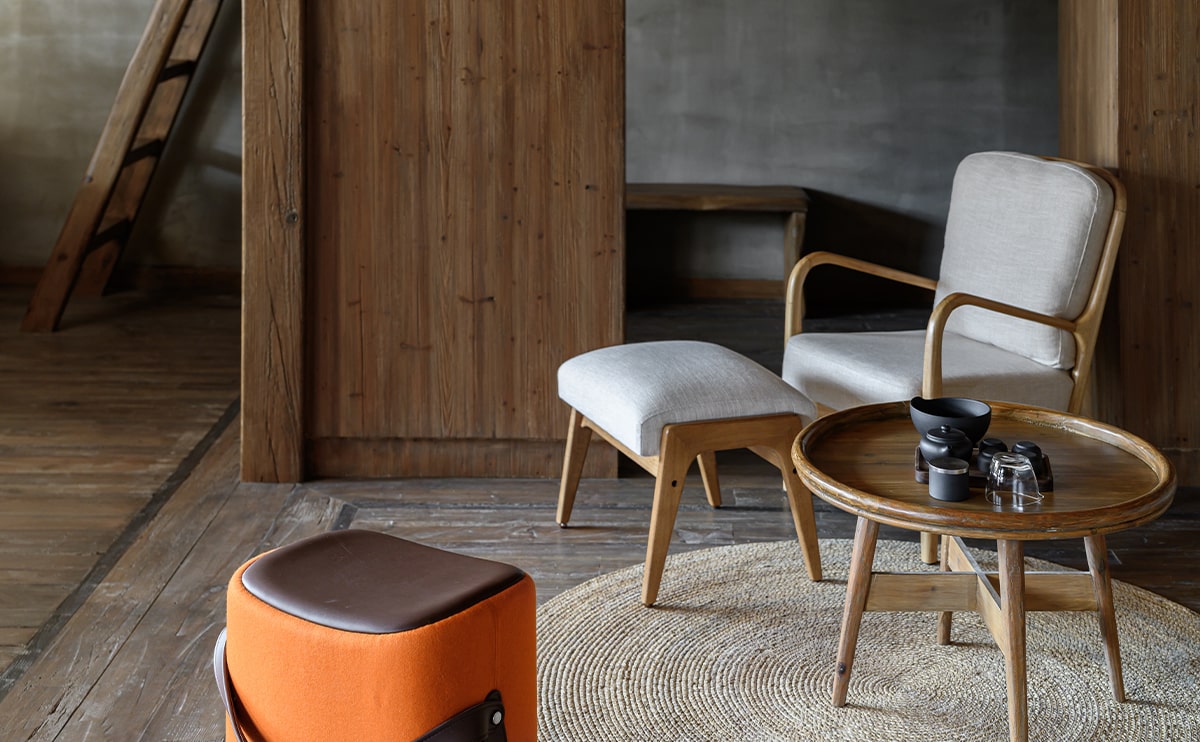
Think of it as layers: floor (rug), furniture (Sofa, Coffee Table, side tables), then light (ceiling, table and floor lamps). Get each layer right and the room feels finished, even with a simple colour scheme.
What size living room rug do I need?
Size is where most people go wrong, and a rug that’s too small is the most common mistake. As a rule, go for the largest rug your room comfortably allows. UK retail guides such as the Argos rug buying guide suggest at least the front legs of your furniture should sit on the rug.
UK sizes are metric and don’t always match the 8×10 ft sizes you see in US articles. An 8×10 ft rug is roughly 240x300cm, which sits between the usual UK sizes below.
| Room size | Common rug size | Best for |
|---|---|---|
| Small (up to about 3m x 4m) | 120x170cm or 160x230cm | Flats, compact lounges, a Coffee Table and one or two chairs |
| Medium | 200x290cm | A 3-seater Sofa with a Coffee Table and an armchair |
| Large or open-plan | 240x340cm | A full seating group, or defining the lounge area in a bigger space |
Guides differ slightly on the border of bare floor. Some UK sources suggest 30-60cm around the edge, while some US-based advice works out at roughly 25-46cm. Treat anything from about 25cm to 60cm as a sensible range, and use the wider end in a larger room.
Where should the rug go around a Sofa, Coffee Table and armchairs?
Use these simple placement rules:
- Sofa: the rug should be wider than the Sofa, or at least have the front legs on it, so it extends past each end.
- Coffee Table: the whole table should sit on the rug, ideally with space to spare on every side.
- Armchairs: either all four legs on the rug, or front legs only, matching what you’ve done with the Sofa.
- Rug direction: run it in the same direction as the longest wall or the Sofa, so it feels planned.
Can a rug be too big? Yes, if it runs wall to wall or touches doors and radiators. Keep that bare floor border so the shape still reads as a rug.
Which rug material, pile and colour suit a busy family room?
Living rooms are among the busiest rooms in a house, so practicality matters as much as looks. As John Lewis’s rug guide notes, wool is warm and hard-wearing, while synthetic fibres such as polypropylene are easier to keep clean.
- Wool: warm, comfortable and generally long-lasting with proper care, though usually a bigger outlay and slower to dry after spills.
- Polypropylene and other synthetics: cope well with spills and muddy feet, but the pile can flatten over time in high-traffic spots.
- Jute, sisal and seagrass: natural texture and a relaxed look, but better suited to adults than to sticky-fingered toddlers.
Choose a low or medium pile if you have pets, children or a robot vacuum, and a deeper pile for a quiet corner where comfort matters most. Flat weaves are the easiest to vacuum and sit neatly under a Coffee Table.
On colour, a dark rug can make walls feel closer in, while a navy or charcoal shade can feel cocooning in a big, echoey room. Beige, cream, sand and light grey add texture without overpowering neutral walls. UK daylight is often soft and cool, so check a swatch in your own light before deciding.
How do you layer lighting with living room lamps?
Good living room lamps work best as part of three layers, not as a single fix:
- Ceiling light: broad, general light for cleaning, tidying and busy evenings.
- Table lamps: intimate pools of light at seated height, ideal for a side table, Table Lamps on a Sideboard or a bookcase shelf.
- Floor lamps: add height and fill dark corners, particularly beside a Sofa or armchair.
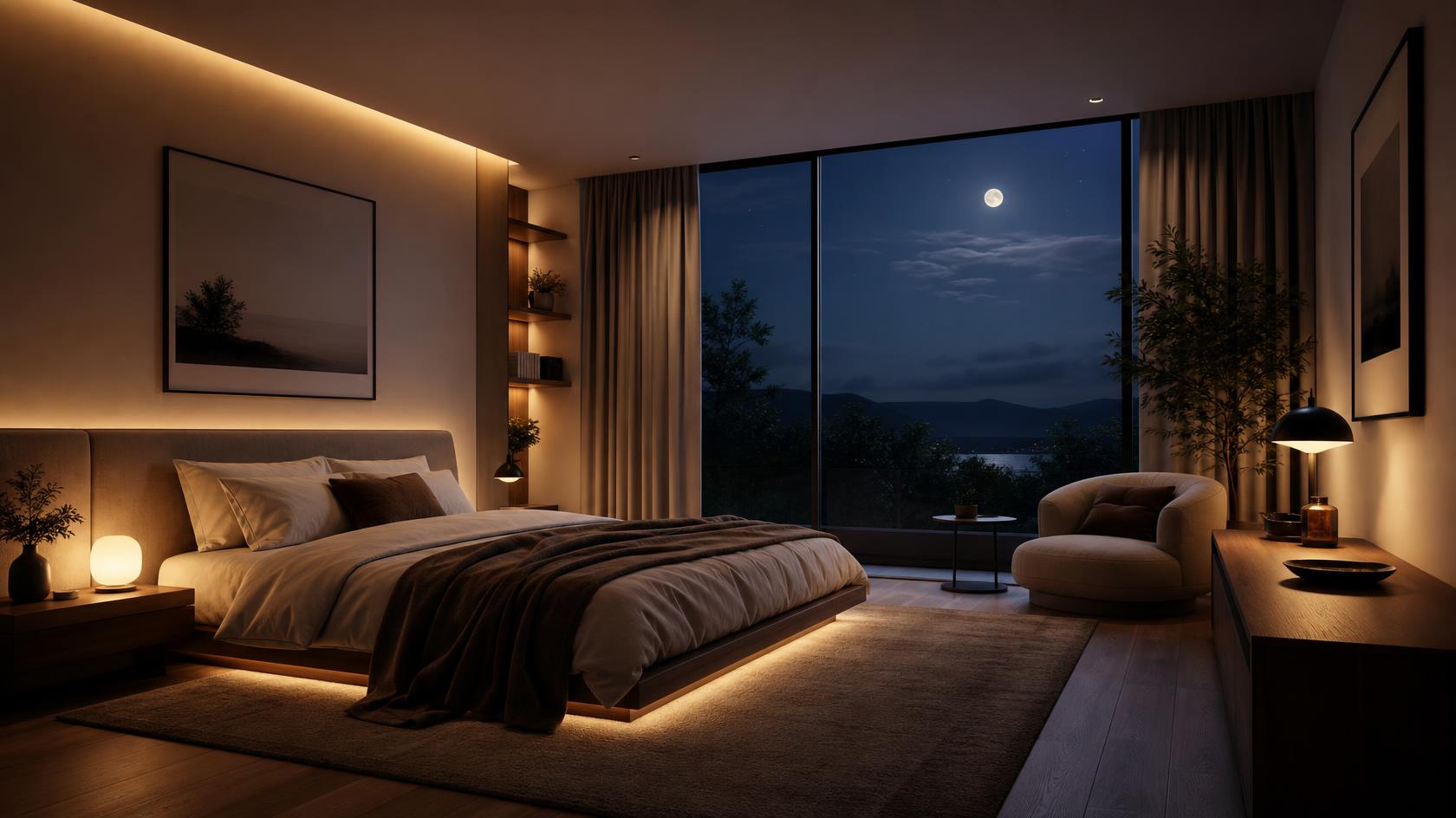
Aim to have at least two or three light sources at different heights in the room, and switch off the main light in the evening. Lamps placed on opposite sides of the Sofa, or one beside the Sofa and one by an armchair, mirror the rug’s shape and reinforce the seating zone.
How high should a lamp be, and what shade and bulb should I choose?
There’s no single rule, but these practical checks work in most living rooms:
- Height: when you’re seated, the bottom of the shade should sit roughly at eye level or just below, so you don’t see the bare bulb.
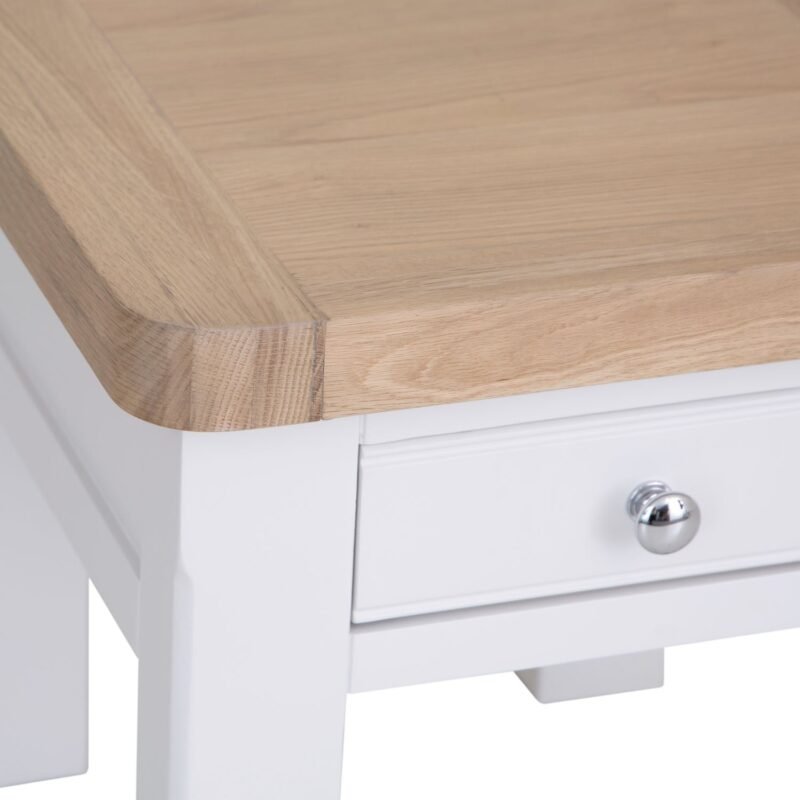
- Proportion: a table lamp shouldn’t be much taller than the surface it sits on is wide, or it will tower over the Side Table.
- Shade: fabric shades diffuse light and feel soft. Dark or opaque shades push light up and down for a more dramatic glow.
- Bulb warmth: choose warm white bulbs (often labelled around 2700K) for living areas. Cool white can feel more like an office.
- Dimming: if your lamps and bulbs support it, a dimmer gives you bright light for tasks and a gentle glow for films.
How do I match rugs and lamps to Sofas, Coffee Tables, Sideboards and TV Units?
Start with the biggest piece and work down. Your Sofa sets the colour and style, the rug sits underneath it, and the lamps pick up one accent from either.
- Sofas: if the upholstery is plain, a patterned rug adds interest. If it’s patterned, keep the rug simple. Browse our Sofas for shapes and colours that give you a calm starting point.
- Coffee Tables: a wooden table suits a textured rug, while a lighter finish can sit on a deeper or darker tone. Check out our Coffee Tables and make sure the whole base fits on the rug.
- Sideboards and TV Units: these stand against the wall, so the rug usually stops short of them. Put a table lamp on a Sideboard to balance a floor lamp opposite, or use our TV Units as the focal point and keep any lamp light off the screen to avoid glare.
One note on safety: the Furniture and Furnishings (Fire) (Safety) Regulations 1988 cover upholstered furniture such as Sofas, cushions and pouffes, which should carry a fire safety label. They don’t cover floor rugs, so don’t treat a rug as a stand-in for that checking when you buy upholstery.
What are the best rug and lamp tips for small and rented living rooms?
You don’t need to change anything permanent to get a cosy result. If you’re tight on space, our guide to furnishing a small living room covers layout in more detail.
- Go bigger than you think: a larger rug makes a small room feel more generous, as long as you keep a bare border.
- Use a rug to hide marks: useful over tired carpet or laminate in a rental. Check it lies flat, and use a non-slip underlay to prevent trips.
- Layering rugs: if you add a smaller rug on top, keep it offset by around 30-45cm on each side of the base rug, and avoid thick edges where people walk.
- Plug-in friendly lighting: table lamps and floor lamps need no drilling, so they move with you.
- Slim furniture: pair a lamp with a narrow Side Table or lamp table rather than a deep surface that takes up floor space.
Quick checklist before you buy
- Measure your seating area and decide where the front legs will sit.
- Leave roughly 25-60cm of bare floor around the rug, depending on room size.
- Pick a pile and material that match how your family uses the room.
- Check colour against your Sofa and walls in daylight.
- Plan three layers of light and where each plug socket is.
- Choose warm white bulbs and a shade that hides the bulb when seated.
- Use non-slip underlay and keep layered edges flat.
Complete the room
Rugs and lamps are the finishing layers, and they work best around furniture you love sitting on. Explore our Living Room furniture and home accessories to build the base, then style around it. Browse the full Furnmart range of Beds, Mattresses, Sofas and Furniture, with delivery across UK Mainland and Multiple Payment Options.
Frequently asked questions
Does a dark rug make a living room look smaller?
It can. A dark rug tends to draw the walls in, which is more noticeable in a small or poorly lit room. In a large or echoey space, a deep navy or charcoal rug can feel cosy. If your room is compact, a mid-tone or light rug is usually safer.
Can I put a rug on top of carpet?
Yes. Choose a rug with a flat weave or a low pile and use a non-slip underlay so it doesn’t creep. A rug with a clear edge or a contrasting colour will stand out better against carpet and help define the seating area.
How far should a rug extend beyond the Sofa?
The rug should be wider than the Sofa, extending past each end, or at least have the front legs resting on it. That way the Sofa looks anchored to the rug instead of sitting beside it.
How many lamps does a living room need?
Most living rooms work well with two or three lamps in addition to the ceiling light. Place them at different heights, such as a table lamp on a Side Table and a floor lamp beside the Sofa, so the light is spread around the room.
What colour bulb is best for living room lamps?
Warm white bulbs, often around 2700K, are usually best for living rooms because they give a soft, yellowy glow. Cool white bulbs can feel harsh and are better suited to kitchens, workspaces or garages.
How do I stop a layered rug becoming a trip hazard?
Keep the top rug flat and thin, and use non-slip underlay beneath both layers. Avoid placing a layered edge in a walkway, and replace any rug whose corners curl up.