Blog
Cabin Bed vs High Sleeper: Which Is Best for Your Child’s Room?


If you’re weighing up a cabin bed vs high sleeper for your child’s bedroom, you’re not alone. Both styles raise the mattress off the ground to free up floor space, but they’re built for different ages, ceiling heights and room layouts. This guide breaks down the height difference, age suitability, storage and desk options, and the safety checks worth doing before you buy.
What is a cabin bed, exactly?
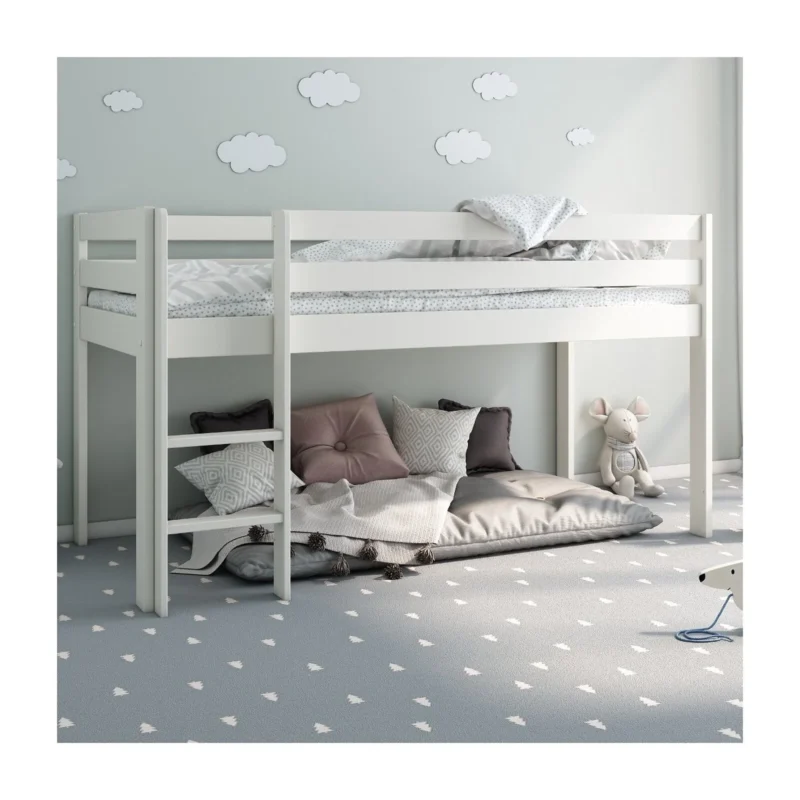
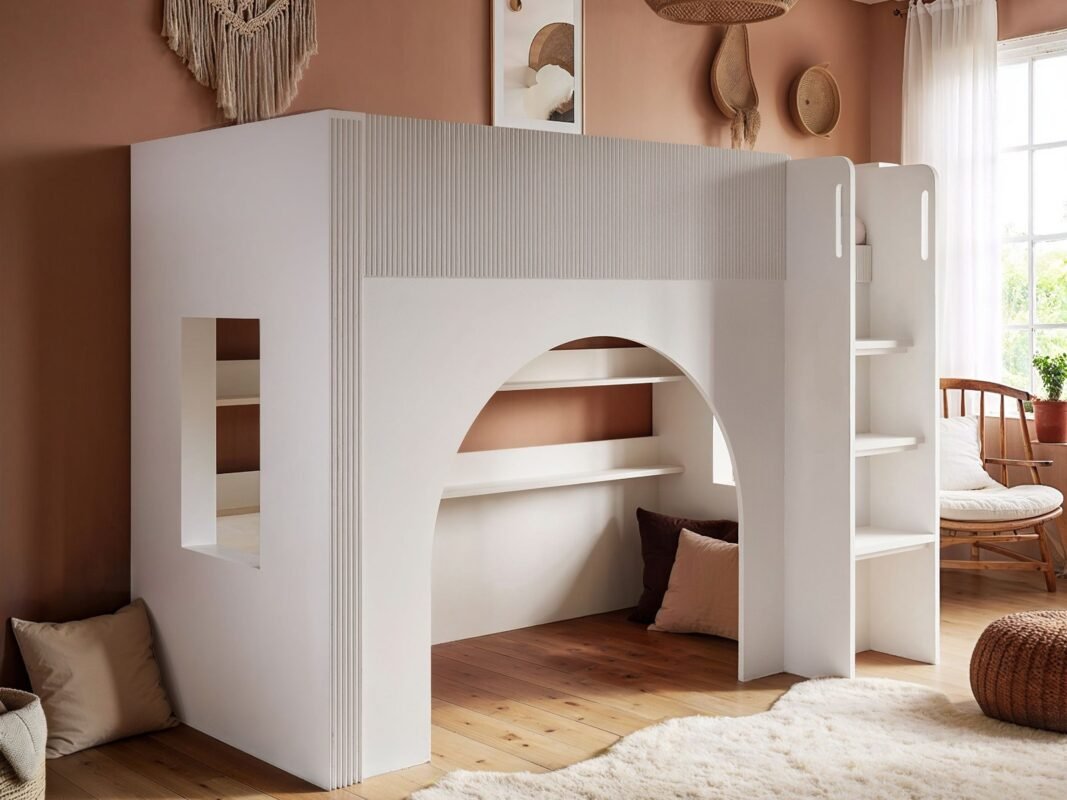
A cabin bed is a bed frame raised just slightly off the floor, usually somewhere between 110cm and 140cm tall. The modest lift leaves a shallow space underneath, typically around 70cm to 110cm of clearance, which is just enough room for built-in drawers, shelves, a small desk nook or a low play den. It’s not tall enough to stand up in fully, but it’s low enough that younger children can climb in and out without much help.
Because everything – the bed, the storage, sometimes a desk – sits within one compact footprint, cabin beds are popular in box rooms where there isn’t space for a separate bed, wardrobe and toy box.
What is a high sleeper?
A high sleeper (sometimes called a loft bed) sits much taller, generally between 170cm and 200cm off the ground. That extra height creates proper headroom underneath, enough to fit a desk and chair, a wardrobe, a small sofa, or a reading corner. High sleepers are the tallest of the raised bed family, with a mid sleeper sitting somewhere in between as a middle-height option that some retailers treat as its own category.
The trade-off for that generous under-bed space is a taller climb, a steeper ladder, and the need for more ceiling height in the room.
Quick comparison
| Feature | Cabin bed | High sleeper |
|---|---|---|
| Typical height | 110–140cm | 170–200cm |
| Space underneath | Shallow – drawers, shelves, low play | Full headroom – desk, wardrobe, seating |
| Recommended age | From around 4 years | 6 years and up (10+ for the tallest styles) |
| Best for | Small box rooms, younger children | Teen study zones, rooms with higher ceilings |
| Ladder | Short, gentle climb | Taller ladder or staircase-style steps |
What age is a cabin bed suitable for?
Cabin beds tend to suit children from around 4 years old, since the slight elevation poses little risk once a child is steady on their feet and able to climb a couple of steps with confidence. They work well right through to about age 10, as the low-level storage and compact footprint continue to make sense for a child’s space and belongings.
High sleepers are a different story. Most UK retailers set the minimum age at 6, as mid and high-sleeper beds carry a greater fall risk for younger children who are less steady on ladders. For the very tallest high sleeper frames with the steepest ladders, it’s worth holding off until closer to age 10, especially if your child isn’t yet confident climbing stairs or ladders unsupervised at home.
When should my child move from a cabin bed to a high sleeper?
There’s no single cut-off, but it helps to check all of the following before making the move:
- Age and confidence: is your child at least 6, and genuinely comfortable climbing ladders or stairs without hesitation?
- Ceiling height: is there enough clearance above the mattress for them to sit up comfortably, with headroom to spare?
- Room purpose: do they now need the under-bed space for a desk, wardrobe or seating area, rather than just low-level storage?
- Night-time habits: are they a sound sleeper who won’t need to get up and down repeatedly in the dark?
If you can tick most of these off, a high sleeper is likely to be the right next step. If not, a cabin bed or mid sleeper gives you a bit more time.
Best cabin bed for small rooms
For the smallest bedrooms, a cabin bed is usually the better fit. Because the bed, storage and sometimes a desk are built into one frame, you avoid needing a separate wardrobe or chest of drawers taking up extra floor space. High sleepers need more vertical clearance to work properly, which can be a limiting factor in box rooms with lower ceilings, particularly in older terraced or Victorian homes where ceiling heights vary more than in newer builds.
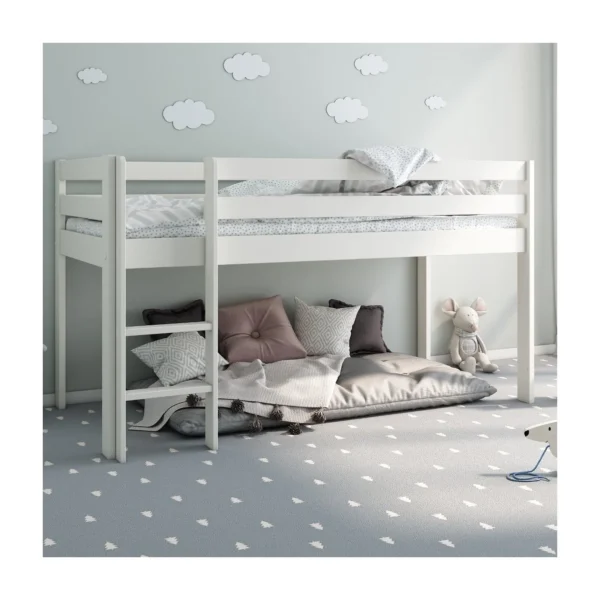
The Low Single 3ft Cabin Bed with Bookcase Headboard is a good example: a single bed frame with built-in storage across three compartments, keeping books and essentials close to hand without eating into the rest of the room. If you want a touch more height without going full high sleeper, the Nora Solid Wood Mid Sleeper Bed offers a solid pine frame with a fixed ladder, striking a balance between safety and space-saving design for younger children.
Browse our full range of cabin beds and mid sleepers to compare styles and storage layouts.
Best cabin beds with storage, and cabin beds with a desk
Storage is where cabin beds tend to shine. Because the frame sits lower, manufacturers build drawers, shelving and bookcases directly into the base or headboard rather than leaving open floor space. This suits bedrooms where storage is the priority over a dedicated workspace.
If you want a cabin bed with a desk, look carefully at the product details, as not all cabin bed frames include one – many prioritise drawers and shelving instead. For dedicated desk space, a high sleeper or mid sleeper with an integrated desk usually makes more sense, since the extra headroom underneath can comfortably fit a chair as well as a work surface.
The Loop Mid Sleeper Bed Full Storage Set With 2 Doors sits at a useful middle height, opening up space below for storage or play without feeling too high off the ground, making it a solid pick if you want more than a cabin bed offers but aren’t ready for a full high sleeper.
High sleepers for storage and study space
High sleepers come into their own once a child needs a proper desk, a wardrobe, or even a small sofa underneath. The extra headroom means the space below can genuinely function as a study area or a second seating zone, which is particularly useful for older children and teenagers who need somewhere quiet to do homework.
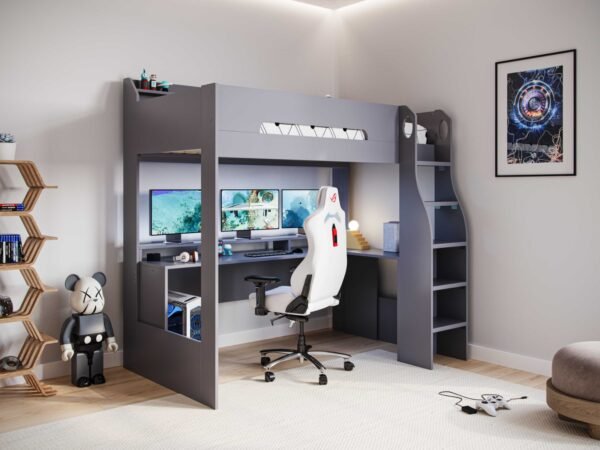
The Harry High Sleeper with Desk & Wardrobe White raises the sleeping area to free up the floor below for a built-in desk and wardrobe, which is ideal if you’re trying to fit a bed, storage and a study space into one room. For a design with a bit more personality, the Skyhigh Gaming High Sleeper Anthracite gives the same space-saving benefit while suiting older children who want a desk set up for gaming or homework.
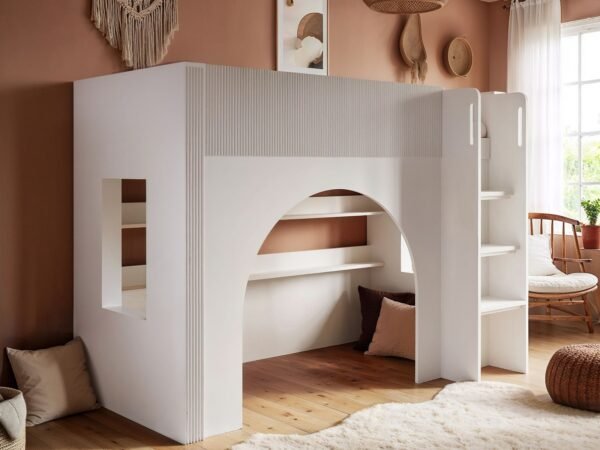
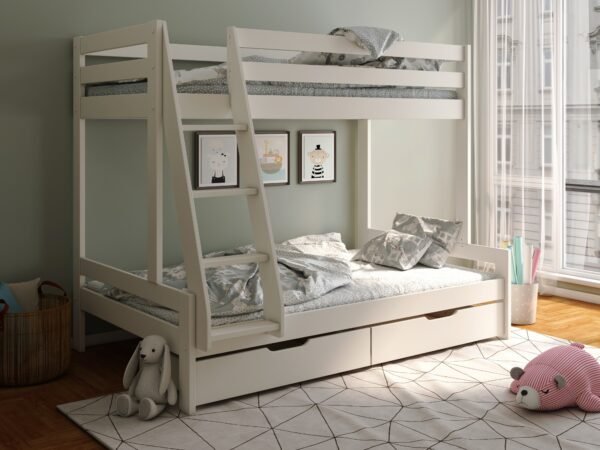
If siblings are sharing a room, it’s also worth comparing bunk beds, such as the Kaska Bunk Bed with Ribbed Panel, the Nora Triple Bunk Bed for three children, or the lower-level Callisto Shorty Bunk Bed, which keeps the top bunk closer to the ground. Our full high sleeper range and bunk bed range are worth a browse if you’re still comparing layouts.
Shop the look
Safety considerations before you buy
Whichever you choose, a few practical checks make a real difference to safety and day-to-day use:
- Guard rails: the upper sleeping area should have full-length guard rails on both sides, not just one.
- Mattress thickness: a thicker mattress reduces the effective height of the guard rail. As a guide, keep the gap between the top of the mattress and the top of the rail at a reasonable height, so check the manufacturer’s recommended mattress depth before buying one separately from our mattress range.
- Ladder type: a straight ladder is more compact but can feel steeper for younger or less confident climbers, while staircase-style steps are easier to use but take up more floor space. Choose based on your child’s age and confidence.
- Ceiling height: allow enough clearance above the mattress so your child can sit up without hitting the ceiling. Always measure the exact spot where the bed will go, as ceiling height can vary across a room, particularly in loft conversions or older properties.
- Fixings: check all bolts, guard rails, ladder fixings and slats regularly, and tighten anything that’s worked loose over time.
A note on delivery
Cabin beds and high sleepers are bulky items, so it’s worth measuring doorways, hallways and stairs before your delivery arrives to make sure the frame will fit through. We offer free UK mainland delivery on our beds, so there’s no extra cost to factor in once you’ve checked access is clear.
If you’re also considering storage solutions for the rest of the room, our guide on ottoman beds for small bedrooms covers a similar space-saving approach for adult or teen rooms, while our kids’ furniture range covers wardrobes and storage to match.
Frequently asked questions
What age is a cabin bed suitable for?
Cabin beds generally suit children from around 4 years old through to about 10, thanks to their lower height and gentler climb compared with a high sleeper.
Can a 5 year old use a high sleeper?
Most UK retailers recommend high sleepers from age 6 upwards, as the greater height and steeper ladder carry more fall risk for younger children. A cabin bed or mid sleeper is usually a safer choice at age 5.
Do cabin beds come with a desk?
Some do, but many cabin beds prioritise drawers and shelving over a desk, since there’s less headroom underneath. If a desk is a priority, a mid sleeper or high sleeper usually offers more usable space for one.
Is a high sleeper safe for a low-ceilinged room?
It can be, as long as there’s enough clearance above the mattress for your child to sit up comfortably. Always measure the ceiling height at the exact spot the bed will go, as it can vary within the same room.
Which is better for a small bedroom, a cabin bed or high sleeper?
A cabin bed is usually the better fit for the smallest rooms, as the bed, storage and sometimes a desk are combined into one low-level footprint without needing extra ceiling height.
Still deciding between the two? Our full range of kids’ beds lets you compare cabin beds, mid sleepers and high sleepers side by side, so you can find the right fit for your child’s age, room and budget.