Blog
How to Furnish a Small Living Room: Layout Guide

Key takeaways
- Measure the room and mark doors, windows, radiators and walkways before you buy anything.
- Choose one focal point, such as the TV wall or fireplace, and arrange seating around it rather than lining everything against the walls.
- Buy in order: Sofa first, then Coffee table, TV unit and extra seating, checking sizes against your doors and stairs.
- Multifunctional pieces like storage Pouffes, nesting tables and Sofa Beds do the work of two items in half the space.
- In studios and small bedrooms, zone the space and use storage Ottoman Beds and vertical shelving to free up floor.
If you’re wondering how to furniture a small living room, start by measuring the space and marking doors, windows and walkways. Choose one focal point, place a right-sized Sofa first, then add only the tables, storage and seating you need. Keep clear paths through the room and use the walls for storage.
If you’re weighing up what to buy for a compact lounge, a plan matters more than a shopping list. Below is the order we’d follow, with quick pointers for general living rooms, studio flats and small bedrooms too.
How to furniture a small living room: start by measuring
Grab a tape measure, a pencil and some paper. A rough sketch is plenty, as long as the numbers are right.
- Measure the walls in centimetres, wall to wall and along the skirting, and note the ceiling height.
- Mark fixed features: doors (and which way they swing), windows, radiators, sockets, chimney breasts and alcoves.
- Draw your walkways. As a general design guideline, aim for about 90cm of clear space along the main routes through the room.
- Check the way in. Measure doorways, hallways, stair turns and any tight corners so a new Sofa or wardrobe actually gets to the room.
Tape the footprint of each piece on the floor with masking tape. It takes ten minutes and shows you straight away whether a Sofa will block the door or a Coffee table will pinch the walkway.
Where should the focal point and seating go?
Every room needs one thing the furniture faces. In most small UK living rooms, that is either the TV wall or the fireplace. Pick one, and arrange the seating around it.
The most common mistake is pushing every seat against a wall, all facing the TV. It feels tidy but leaves a dead hole in the middle. Try these layouts instead:
- Narrow terrace lounge: run the Sofa along one long wall, or place seating across the width in a zone to stop the room feeling like a corridor. Our pick is a slim Accent Chair opposite the Sofa rather than a second Sofa.
- Square room: angle the Sofa and a chair into an L-shape with a small table in the corner of the group.
- Room with a chimney breast: use the alcoves for shelving or a slim unit, and keep the Sofa facing the chimney breast.
For comfortable viewing in a compact room, a distance of roughly 1.8 to 2.4 metres between Sofa and TV is a common rule of thumb. It is a guide, not a rule, so go with what feels natural in your space. For more layout inspiration, this UK guide to arranging furniture in a small living room is a useful read.
Which key pieces should you buy first?
Buy in order of importance. The biggest piece sets the scale for everything else, so don’t start with the small stuff.
1. A compact Sofa or Sofa Bed
Browse our Sofas and check the overall width and depth, not just the seat. A common rule of thumb is to size the Sofa to around two-thirds of the wall it sits on. That leaves room for a side table and a clear edge.
If the room doubles as a spare bedroom, a Sofa Bed is worth a look. Allow 50-60cm in front of it so it can fold out without hitting the Coffee table.
2. A Coffee table that fits the walkway
Leave around 40-45cm between the Sofa and the table so you can reach a mug and still get past. A round or oval shape softens corners in tight rooms. Our Coffee Tables include options with a lower shelf for extra storage.
3. A TV unit in proportion
A low, slim TV Unit keeps sightlines open. If your TV is wall-mounted, a narrow unit below can hold the consoles and remotes without eating floor space.
| Piece | What to check | Handy rule of thumb |
|---|---|---|
| Sofa | Width, depth, arm style | About two-thirds of the wall length |
| Sofa Bed | Size when open | Add 50-60cm clearance in front |
| Coffee table | Height, shape | 40-45cm from the Sofa; about seat height |
| TV unit | Depth, leg height | Slim and low; match width to the TV |
| Walkways | Clear floor space | Around 90cm on main routes |
How can multifunctional furniture help in a small living room?
When floor space is limited, every piece should earn its place. Look for furniture that does two jobs:
- Storage Pouffes and Footstools: extra seating for guests, a footrest for you and a hidden spot for throws and remotes.
- Nesting tables: pull them out when you have company and tuck them away when you don’t. Our Side Tables are handy beside a Sofa or chair.
- Sofa Beds: a seat by day and a guest bed by night, so you don’t need a spare room.
- Sideboards with doors: a place to hide clutter that would otherwise sit on surfaces.
Be honest with yourself about trade-offs. A Sofa Bed mechanism can mean a slightly firmer seat than a standard Sofa, and a storage Pouffe is not a substitute for a proper chair if you’ll sit in it daily.
How do you use vertical space in a small living room?
When the floor is full, go up. Tall, slim pieces use wall space that would otherwise be empty and draw the eye upward, which makes the room feel taller.
- Use Book Cases in alcoves or beside the TV wall for books, baskets and display pieces.
- Keep heavier items low and lighter items higher so shelves do not feel top-heavy.
- Add wall-mounted shelves above the Sofa or a desk, and fix tall units to the wall for safety.
- Mirrors opposite a window bounce light around and make the room feel bigger.
How do you furnish a studio apartment?
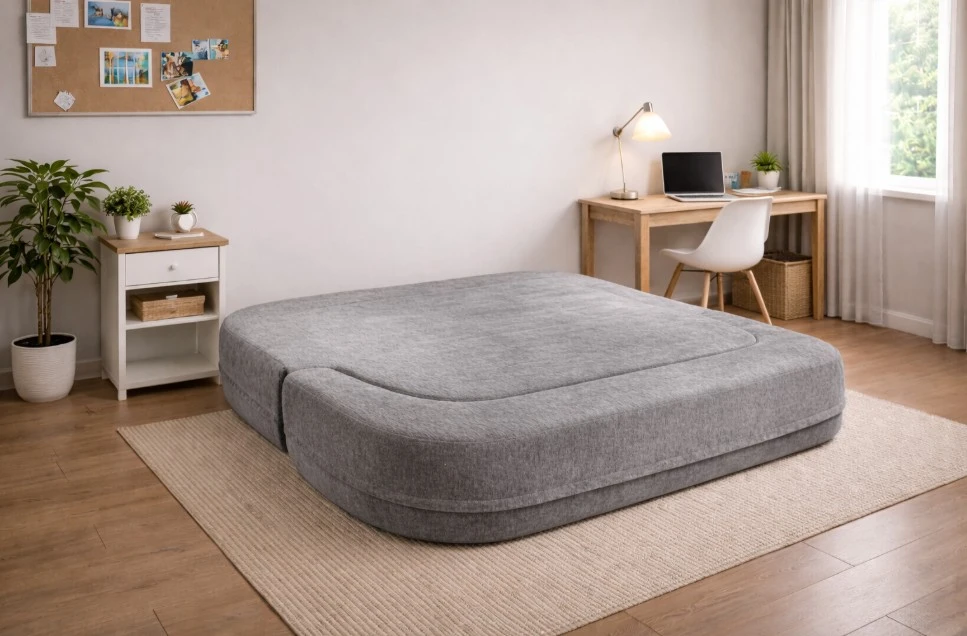
Knowing how to furniture a studio apartment is mostly about zoning. You are fitting sleeping, living and eating into one space, so give each activity a clear patch of floor.
- Sleep zone: place the bed furthest from the entrance. A Sofa Bed or a storage bed saves floor space, and a bookcase or open shelving can act as a soft divider.
- Living zone: a compact Sofa, small Coffee table and TV unit, positioned so the Sofa back faces the bed area.
- Dining zone: a drop-leaf or small round table near the kitchen, with chairs that tuck fully underneath.
- Rug: use a rug to define the living area. Make it large enough for at least the front legs of the furniture to sit on it.
Keep furniture styles and colours consistent across zones. It stops the open-plan space looking busy.
How do you furnish a small bedroom?
The same logic applies upstairs. If you’re working out how to furniture a small bedroom, put the bed in first, then fit everything else around its walkway.
- Choose an Ottoman Bed. The whole base lifts up to reveal a storage space the full size of the mattress, so bulky bedding and out-of-season clothes need no extra furniture. Our Ottoman Bed buying guide explains sizes and what fits inside.
- Go slim on storage. Narrow Bedroom furniture, such as tall chests of drawers and compact bedside tables, takes less floor space than wide units.
- Check door clearance. Make sure wardrobe doors can open fully, or choose sliding doors.
- Leave space at the sides. Gas-lift ottoman bases need headroom above, and drawer beds need side clearance.
What are the most common mistakes to avoid?
- Buying before measuring. A Sofa that is a few centimetres too wide will dominate the room. Check door and stair measurements too.
- Pushing everything against the walls. Floating the Sofa slightly forward can make the room feel more intentional, especially in a larger square room.
- Blocking walkways. If you have to sidestep a table every time you cross the room, move or replace it.
- Choosing too many small pieces. A crowd of little tables looks cluttered. A few well-sized pieces feel calmer.
- Using a tiny rug. A small rug floating in the middle makes the room look smaller. Go larger so furniture connects.
- Forgetting light. Combine a ceiling light with a lamp or two so the room feels warm in the evening. This small living room seating layout guide has more ideas to compare.
Ready to furnish your space?
A small room works best with a clear plan: measure, choose a focal point, buy the big pieces first and make the rest earn their place. Browse our full Living Room furniture range to find compact pieces for your layout. Most orders come with free UK Mainland delivery. Browse the full Furnmart range of Beds, Mattresses, Sofas and Furniture, with delivery across UK Mainland and Multiple Payment Options.
Frequently asked questions
Can I put a large Sofa in a small living room?
You can, but it needs to be the only big piece. If a large Sofa takes up most of a wall, keep the other furniture slim and light. Always tape out its footprint and check it will fit through your doors and up the stairs.
Where should the Sofa go in a small living room?
Usually along the longest uninterrupted wall, facing your focal point such as the TV or fireplace. In a narrow room, try placing it across the width to create a seating zone. Leave about 90cm of clear walkway wherever you can.
How can I make a small living room look less cluttered?
Reduce the number of surfaces and give everything a home. Use Sideboards, storage Pouffes and Book Cases with baskets to hide small items. Keep the floor space around the main pieces clear and stick to a consistent colour palette.
What furniture works best in a studio flat?
Multifunctional pieces work best: a Sofa Bed or storage bed, nesting tables, a slim TV unit and a small dining table with tuck-away chairs. Zone the sleeping, living and eating areas with a rug or shelving unit to keep the space organised.
How much space should I leave around a Sofa Bed?
Allow around 50-60cm in front so the bed can open fully, and check the open dimensions rather than just the closed size. Make sure a Coffee table can be moved easily when the bed is in use.
How do I arrange a small living room without a TV?
Make a different focal point, such as a fireplace, a window view or a bookcase wall. Arrange seating in a loose conversation group facing each other, with a small table in between.