
Blog
Which Dining Table Is Best? Materials, Shapes and Chairs

Key takeaways
- The best dining table is the one that suits how you use it every day, then fits your room with space to pull chairs out.
- Wood and oak-finish tables are a sturdy all-rounder, while glass and marble-effect tops look sleek but need more care.
- Rectangular tables suit long rooms, round tables suit square rooms, and extending tables give you flexibility for guests.
- The most comfortable dining chairs have a padded seat, a supportive back and the right height for your table.
- Wipe-clean faux leather or tightly woven fabric makes the easiest chairs for families.
Which dining table is best? For most UK families, it is a hard-wearing wood or wood-effect table in a shape that suits your room, paired with comfortable, easy-care chairs. Rectangular suits long rooms, round suits square ones, and an extending top adds flexibility. Start with how you actually use the table.
How will you use your dining table?
If you’re weighing up tables, the first question isn’t style. It’s what the table has to do day to day. A table that works for a couple eating on trays is very different from one that handles homework, craft projects and Sunday lunch for the whole family.
Ask yourself:
- Daily meals: do you eat here every night, or mostly at the sofa?
- Homework and working from home: you’ll want a surface that copes with pens, laptops and the odd spill.
- Entertaining: how often do you host, and how many people at once?
- Room shape: is the table in its own dining room, or a corner of an open-plan kitchen or lounge?
If you host only a few times a year, an extending table is usually better value than a large fixed one that dominates the room the rest of the time. For sizing by number of people, our dining table 6 seater vs 4 seater guide covers the measurements in detail, so we won’t repeat them here.
Which dining table material is best?
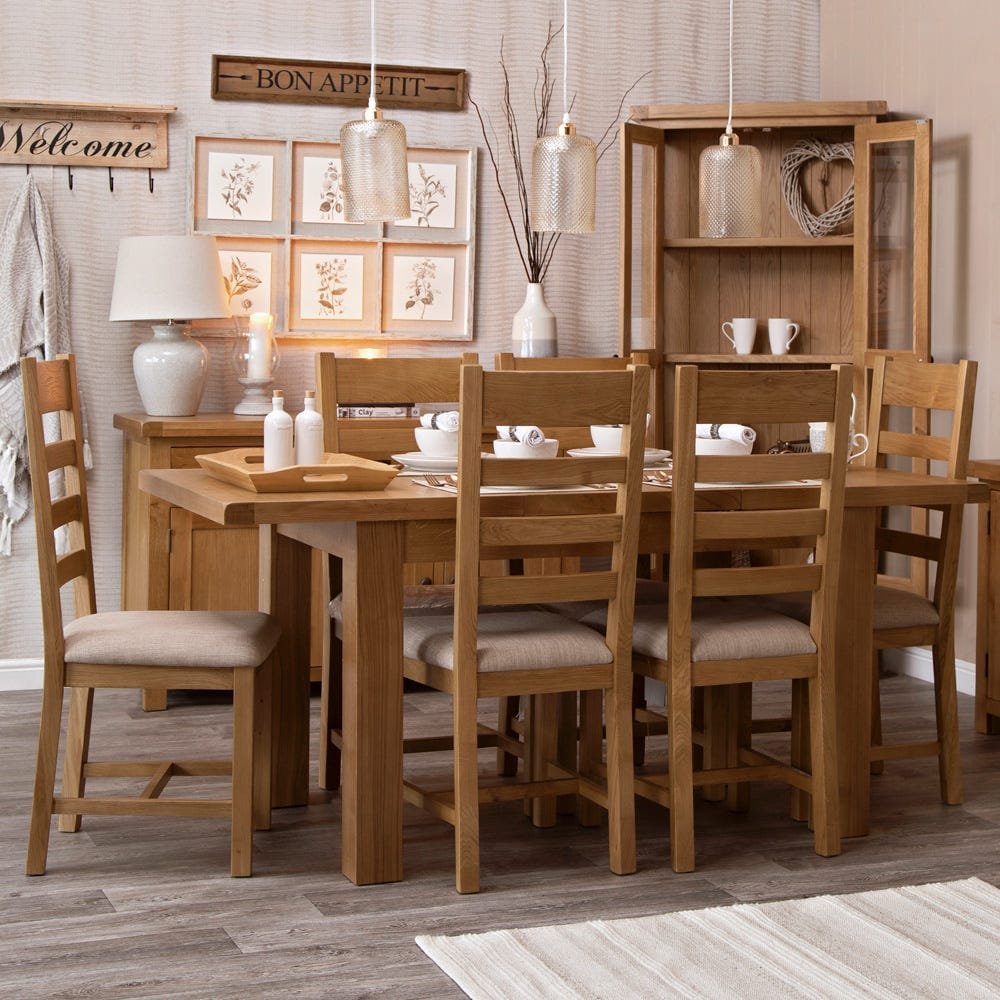
There’s no single winner, because the answer depends on how hard the table will be used. Wood and oak-finish tables are the safest choice for most households. They’re sturdy, they look good with almost any chair, and everyday marks tend to blend in rather than shout.
| Material | Durability | Upkeep | Best for |
|---|---|---|---|
| Solid wood | Very good; can often be sanded and refinished | Wipe clean, use mats for hot dishes | Families who want a table to last |
| Wood veneer or wood-effect | Good; stable, but a deep gouge can’t be repaired the same way | Easy wipe-clean surface | Busy homes and sensible budgets |
| Glass | Strong when toughened, but shows marks | Frequent wiping for fingerprints | Small rooms where you want a lighter look |
| Marble effect | Hard-wearing surface, depending on the finish | Wipe clean; avoid harsh cleaners | Modern, statement-style dining areas |
| Metal frame with wood top | Sturdy and stable | Low; occasional wipe | Industrial or contemporary rooms |
Wood versus veneer: what’s the real difference?
Solid hardwood can be sanded and refinished over the years, which is why it’s so often recommended. Veneer is more stable and usually more affordable, but it can’t survive a deep gouge in quite the same way. For a family table that will see daily use, either works if you protect the surface with placemats and coasters.
Is glass or marble effect a good idea with children?
It can be, with realistic expectations. Glass looks light and airy, but every fingerprint shows. Marble-effect tops are easier to live with, though you’ll still want to wipe spills promptly. If you want low fuss, a wood-effect finish is more forgiving.
If you like the warmth of oak, ranges such as the Hartwell Oak 1.25m Butterfly Extending Dining Table and the Hampden Smoked Oak 1.8m Butterfly Extending Dining Table show how different oak tones change the feel of a room.
Which dining table shape is best for your room?
A useful rule: rectangular tables suit rectangular rooms, while round tables work best in square spaces. Shape affects how easily you can walk around the table and how sociable the meal feels.
| Shape | Suits | Trade-off |
|---|---|---|
| Rectangular | Long or narrow rooms; larger groups | Corners can be awkward in tight walkways |
| Round | Square rooms and small spaces; easy conversation | Seats fewer than a rectangle of similar size |
| Oval | Medium to large rooms; softer edges | Needs more floor space than it looks |
| Extending | Everyday small-group dining with occasional guests | Leaf needs storing or folding away |
How much space do you need around the table?
Allow around 60cm of table width per person so elbows aren’t colliding. Then leave roughly 90cm or more between the table edge and the wall or other furniture, so chairs can be pulled out and people can still squeeze past. Standard table height sits at roughly 71-76cm.
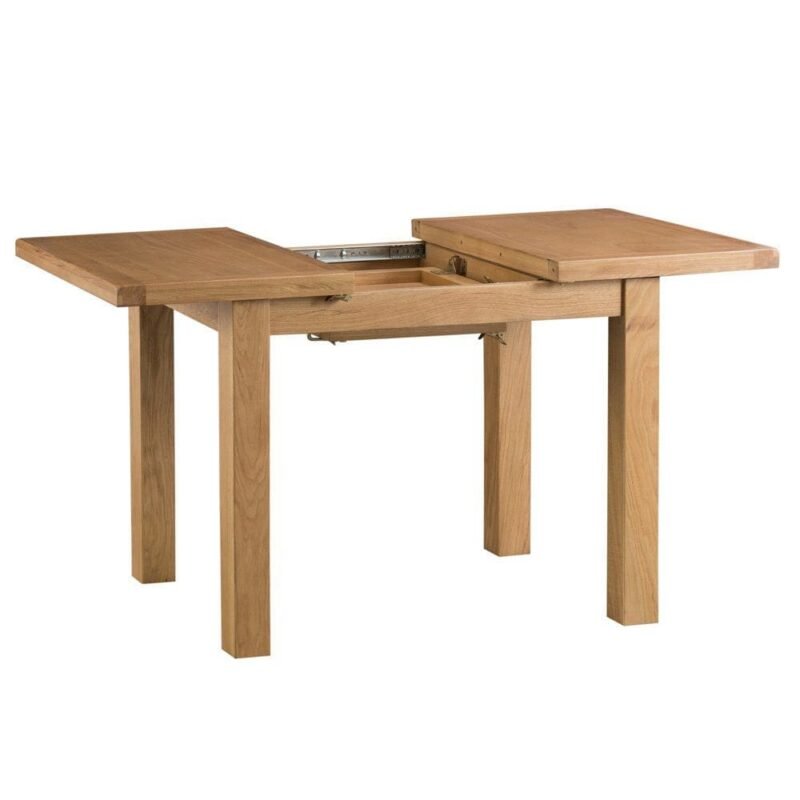
Short on space? A butterfly extending table, where a leaf folds out from the middle, gives you a compact everyday size and extra room for guests. The Hartwell Oak 1m Butterfly Extending Dining Table is a good example for smaller rooms, while the Linnea Light Oak Small Fixed Top Dining Table suits a tight corner where you don’t need to extend.
Which dining chairs are most comfortable?
Chairs are often an afterthought, but they decide whether people linger over a meal or fidget. When people ask which dining chairs are most comfortable, the answer comes down to four things.
- Seat padding: a padded seat is kinder over a long dinner than bare wood. Firm, supportive padding beats very soft padding that sinks.
- Back height and support: a mid to high back supports your spine. Slatted and cross-back designs can be comfortable too, if the back is gently angled.
- Arms: arms add comfort but take up width. If you choose carvers or armchairs, check the arms slide under the table.
- Seat height: leave enough gap between seat and tabletop for your legs. As a rough guide, aim for around 25-30cm.
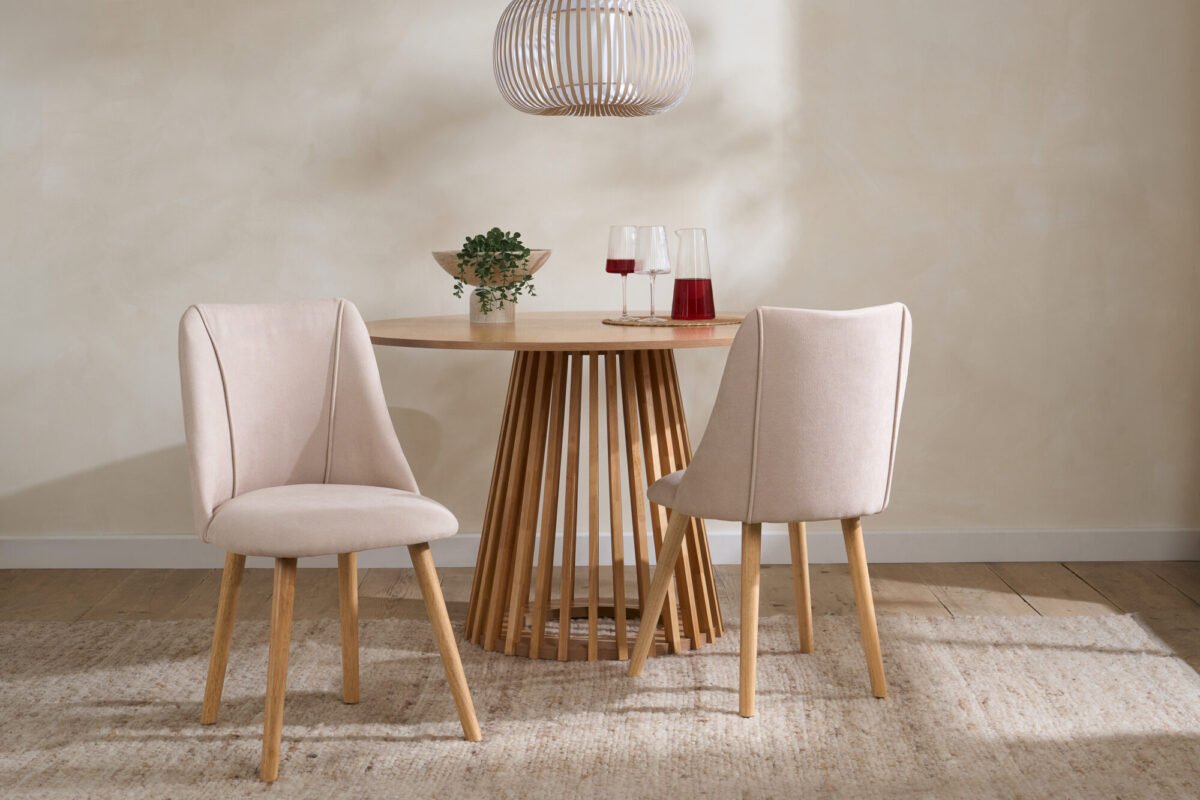
For long, relaxed dinners, upholstered options like the Sienna Velvet Dining Chair (Set of 2) give you a padded seat and a more cushioned feel. If you like to turn to chat or get up easily, a swivel design such as the Orbit Faux Leather Swivel Dining Chair (Set of 2) is worth a look.
What are the best dining chairs for families and easy cleaning?
If you’re choosing the best dining chairs for a busy household, think about what lands on them. Crumbs, juice and muddy school trousers are all part of the job.
- Faux leather: the easiest to wipe down. Good for younger children and messy eaters. Options include the Mason Faux Leather Dining Chair (Set of 2).
- Tightly woven fabric: comfortable and warmer to sit on, though spills need dealing with quickly.
- Velvet: soft and stylish, but it shows marks more readily. Better for adult households or occasional dining.
- Wooden seats: hard-wearing and simple to wipe, but less comfortable for long meals.
A middle route is to pair a wooden table with fabric-seat chairs, where only the seat pad needs cleaning. Ranges such as the Hartwell Oak Cross Back Dining Chair with Fabric Seat (Set of 2) do just that.
Do dining chairs have to meet safety rules?
Upholstered furniture for homes falls under the Furniture and Furnishings (Fire) (Safety) Regulations 1988. Dining chairs are covered where they have a padded seat or back, so look for the permanent label on each chair. Commercial standards such as BS EN 16139 apply to non-domestic seating, so they matter if you’re furnishing a café or guest house, not a family kitchen.
What dining room tables are in style right now?
If you’re wondering what dining room tables are in style, the mood is warm, relaxed and built to last rather than a passing trend.
- Natural wood tones: light and mid oak finishes bring warmth, and darker smoked tones add depth.
- Pedestal and cross-leg bases: fewer legs means more room for knees and extra chairs.
- Rounded edges: softer corners feel friendlier and are kinder if children run past.
- Mixed seating: a bench on one side with chairs on the other, or two chair styles mixed with care, makes the room feel collected rather than matched.
- Statement chairs: velvet, button-back or retro shapes add colour while the table stays neutral.
Choose one standout element, usually the chairs, and keep the rest calm. Retro styling like the Nova Retro Velvet Dining Chair (Set of 2) shows how one piece can change the mood. For a bold table, the Hampden Smoked Oak 2.0m Cross Leg Dining Table is a good example of the cross-leg look.
Dining table checklist before you buy
- Decide how you’ll use the table: daily meals, homework, entertaining, or all three.
- Measure your room and leave around 90cm or more around the table.
- Allow about 60cm of width per person.
- Pick a material that matches your tolerance for upkeep: wood or wood-effect for easy living, glass or marble effect for style.
- Choose a shape that suits the room: rectangular for long rooms, round for square ones, extending for flexibility.
- Check chairs have padded seats, supportive backs and arms that fit under the table.
- Measure doorways, hallways and stairs, and check whether assembly is needed.
Ready to choose your dining table?
The best dining table is the one that fits your room, your routine and the way you eat. Choose a forgiving material, a shape that works with your space, and chairs you’ll be happy to sit on for an hour. At Furnmart you’ll find Dining tables, chairs and sets together, with free UK Mainland delivery and a price match guarantee (subject to terms). Browse the full Furnmart range of Beds, Mattresses, Sofas and Furniture, with delivery across UK Mainland and Multiple Payment Options.
Frequently asked questions
What is the most durable material for a dining table?
Solid hardwood such as oak is generally the most durable, because it can often be sanded and refinished. Wood veneer and wood-effect tables are also hard-wearing for daily use. Use placemats and coasters to protect any surface from heat and scratches.
Which dining table is best for a small room?
A round table or a compact extending table usually works best. Round tables suit square spaces and are easier to walk around, while extending tables let you stay compact day to day. Whatever you choose, leave at least 90cm around it for chairs.
How tall should dining chairs be compared with the table?
Dining tables are usually about 71-76cm high, and chairs should leave a comfortable gap between seat and tabletop, roughly 25-30cm. If chairs have arms, check they slide under the table. A quick test is to sit down and make sure your knees don’t touch the underside.
What are the easiest dining chairs to keep clean?
Faux leather chairs are the easiest, as most spills wipe straight off. Tightly woven fabric is a good second choice, though stains need dealing with quickly. Velvet looks lovely but shows marks more easily.
Should I buy a round or rectangular dining table?
Choose rectangular if your room is long or you regularly seat larger groups. Choose round if your space is square or you want easy conversation. If you’re unsure, an extending table gives you the flexibility to change with the occasion.